
Lifecycle Management is the Bottleneck - Here’s how Lumos unblocks it with AI
May 23, 2025
Lifecycle Management is the backbone of modern identity governance—but too often, it breaks under scale. Discover how Lumos redefines LCM with automation, AI, and real-time visibility to reduce risk, cut overhead, and boost productivity across the enterprise.
Last Updated
Jun 5, 2025


A global fintech company—100% cloud-based and operating entirely on SaaS—recently brought on a Head of Identity Security with a clear mandate: centralize identity, scale with confidence, and deliver an employee experience that didn’t feel like a legacy IT system.
But they quickly realized that the tools they’d used to get from startup to scale-up couldn’t carry them forward. Their homegrown systems weren’t built for scale. Access reviews were clunky. Onboarding took too long. Offboarding was a security risk. Identity was treated like an engineering problem—not a strategic one.
In their first two months with Lumos, they automated onboarding and offboarding across 150+ apps. Two months later, they centralized access reviews. Adoption was high because the UX was built for employees, not just admins. The results?
- 40% faster access reviews
- Fewer tickets and manual approvals
- Continuous license cleanup without annoying stakeholders
- More time to focus on high-impact work
That’s what happens when Lifecycle Management actually works and why LCM is the cornerstone of modern identity governance. And that’s what Lumos is here to help you build.
Why Lifecycle Management Still Breaks Down
At a glance, LCM seems simple: grant the right access when someone joins, adjust it when they move, revoke it when they leave. But most companies struggle with exactly that.
Why?
Because you’re managing:
- Hundreds of apps across SaaS, cloud and on-premise environments
- Multiple identity sources, further complicated by distinction between full-time, contractors and partners and distinction between humans and non-humans.
- Constant org and team changes with promotions, departures, M&A activities, new business initiatives, etc
- And a whole lot of manual reviews and approvals
The result? Friction, overhead, and endless backlogs. The impact? Risks, lost productivity, slower growth.
What Good Looks Like
When LCM works, security improves, onboarding accelerates, and IT gets to breathe again. It looks like:
- New hires are productive on Day 1 with exactly what they need, no more and no less.
- Access changes applied instantly during team and organization shifts.
- Departures with full, verifiable deprovisioning - shrinking security incidents.
- A sharp drop in access requests and support tickets.
And most importantly: it’s automated. Not maintained through error-prone and cumbersome manual tasks and spreadsheets. Standardized LCM means faster reviews and approvals, lesser risk and access sprawl and bigger savings on time and spend.
{{incontentmodule}}
Why Lumos Is Different
Most identity tools bolt LCM onto the side of legacy platforms. Lumos built LCM from the ground up—with AI, automation, and usability at the core.
Here’s how we do it:
Real-Time Visibility and Control
Most IGA solutions stop at course-level provisioning or work only with SCIM-based apps. Lumos natively connects to hundreds of SaaS and custom apps, enabling visibility and granular provisioning down to the entitlement level. With Lumos, you can:
- Track every identity across 300+ apps and custom integrations
- See who has access, why, and for how long to drive fine-grained access provisioning
- Give managers and app owners simple, guided workflows to review and approve with a complete view of all their pending tasks across provisioning.
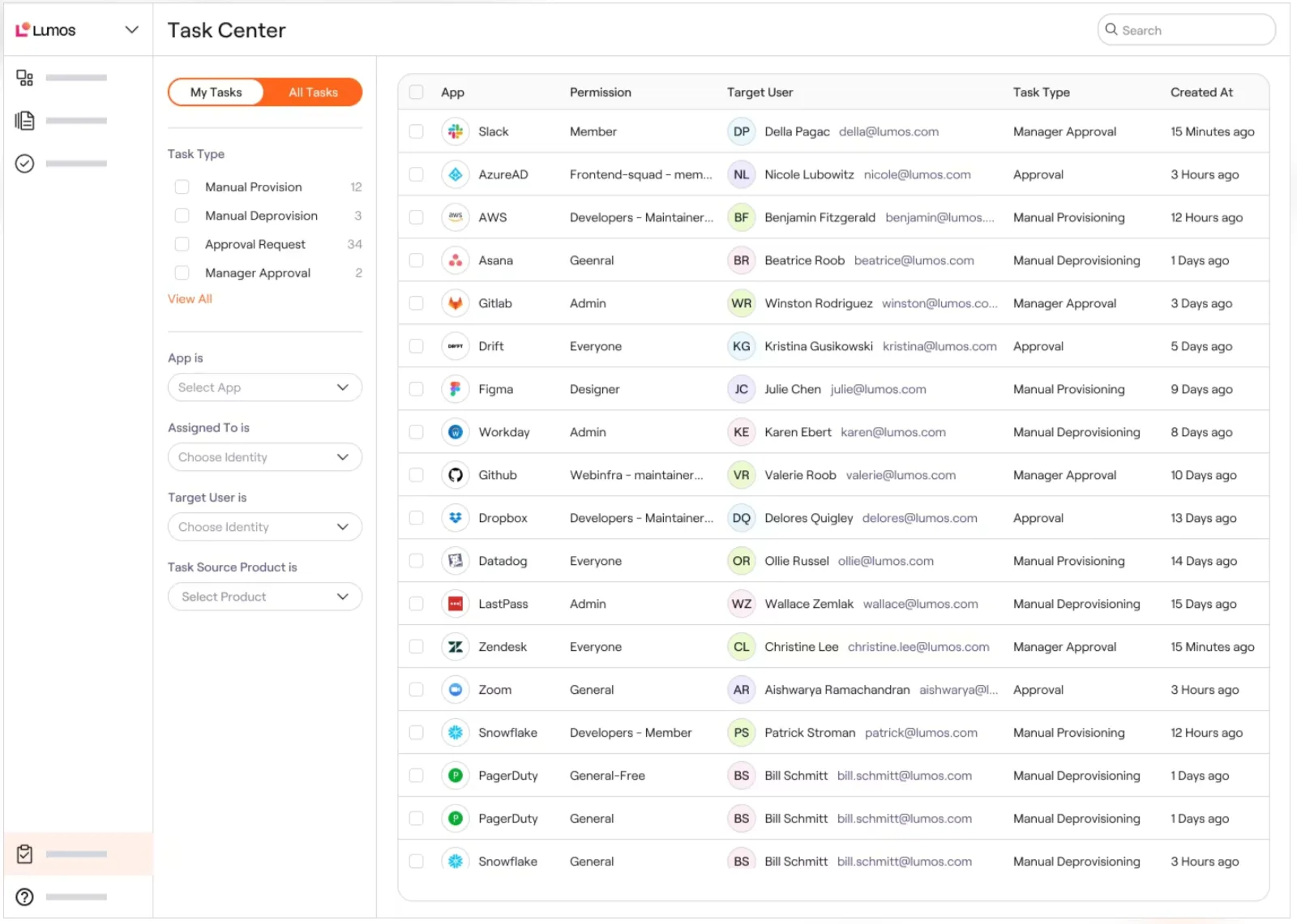
Everything is centralized, auditable, and built for speed and scale.
Advanced Role Intelligence and Context
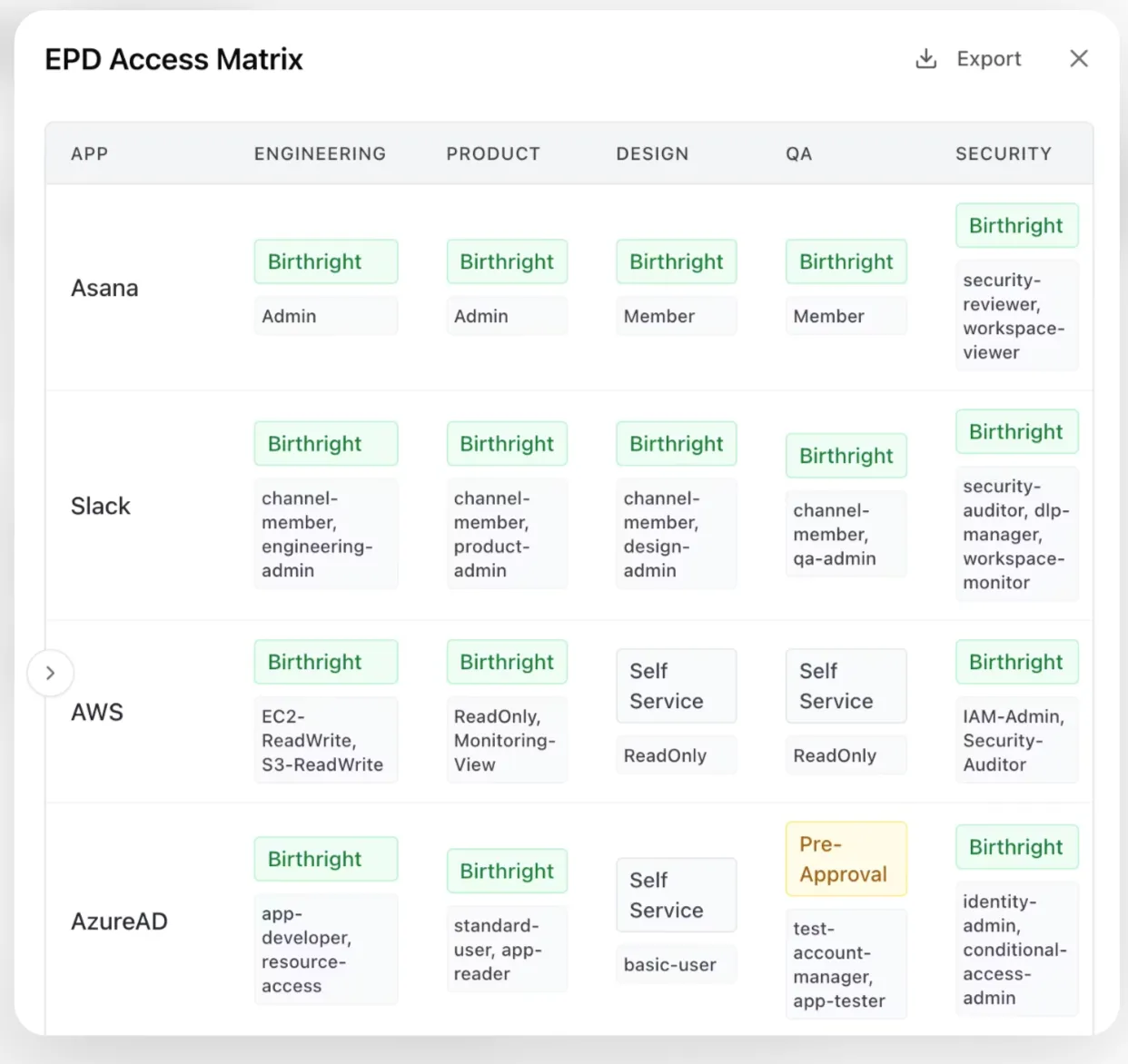
Whether it is birthright access or pre-approval policies or ticket-based access, IT teams need to know who is asking for what access and whether it matches their needs. Typically what happens is that accesses get cloned, users are over-provisioned with access and result in access sprawl. Or roles within the apps bloat as the teams try to design the right provisioning levels. With Lumos:
- Access isn’t guessed, but is analyzed with HRIS data, usage logs and entitlement history
- Understand which employee groups use which apps and entitlements and identify anomalies and latent role patterns.
- Turn insights into action with auto-defined roles and policy creation.
AI-powered Policy Management
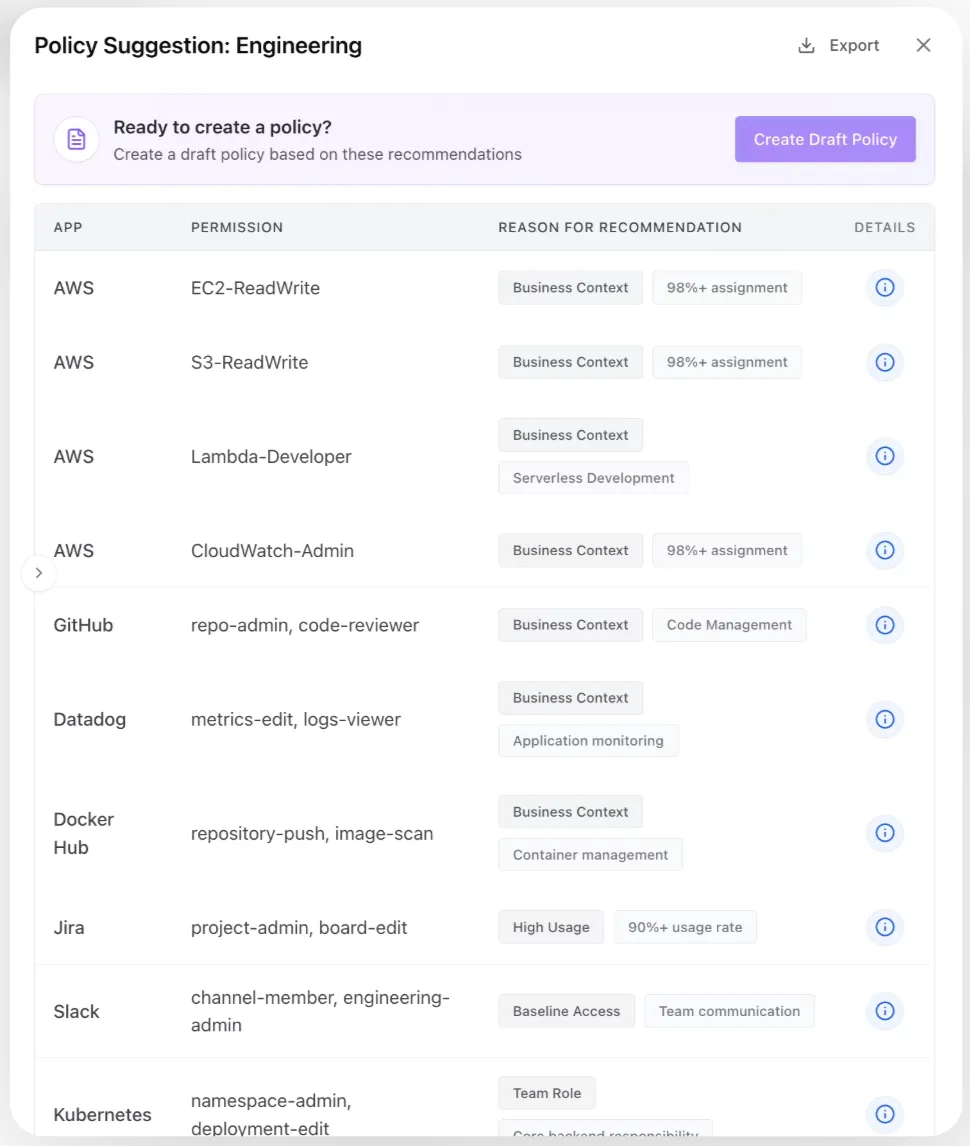
Rather than static roles or one-size-fits-all rules, every JML event has to be smartly automated with the right context and secure optimization. Lumos’ AI-driven policy engine uses actual access patterns, entitlements and organizational context to build better RBAC policies and:
- Recommend policies in natural language with document-backed explanations.
- Visualize the policy recommendations with confidence scoring in an intuitive UI.
- Automatically optimize and refine policies continuously to keep up with org and threat changes.
JML Automation at Scale
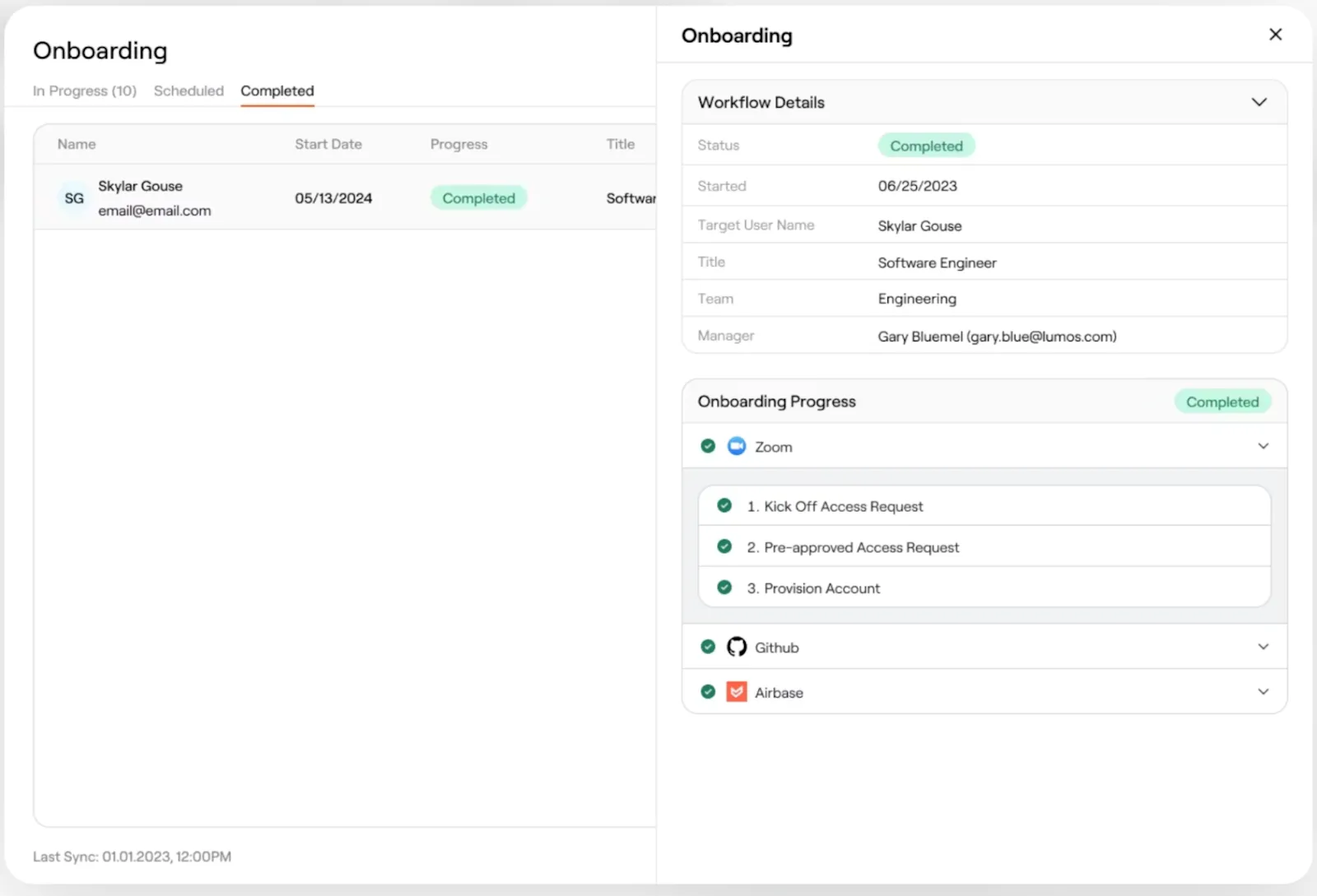
With every job change and missing JML workflows, there is added risk, more manual overhead and lost efficiency. With Lumos, no more tickets or incidents or errors. Ensure:
- Employees get access on Day 1 with custom attributes, logic, and triggers (e.g., "5 days before start date, create email; 2 days before, assign Google Workspace").
- Movers get policy-driven access updates in real time, based on their role and team changes.
- Departures trigger deep de-provisioning across the full tech stack, closing gaps and removing stale access.
Customer Results
No more hoping for the best. With Lumos, customers report having:
- Reduced JML tickets
- Fewer dormant accounts and risky access
- Improved audit outcomes
- Faster employee ramp-up
LCM isn’t just IT hygiene—it’s the front line of your identity program. The good news? You don’t have to build it yourself. Lumos is already helping companies like yours put identity on autopilot—with real results and zero guesswork.
Want to see it in action? Book a demo today!
Keep Reading






Don't let any identity become your next breach.
Govern every human, machine, and AI in your business with a free identity assessment today.
Book a Demo
The autonomous identity platform. Agents that continuously govern access for every human, machine, and AI.