
The First Identity Agent for the Agentic IGA Era
Albus brings AI to role design, access reviews, and investigations - explaining every decision so you can verify it in seconds, not days.

Trusted by the world's most innovative companies













Identity Sprawl Has Outrun Manual Governance
Role design and access reviews still run on spreadsheets, tribal knowledge, and rubber-stamping, while apps, entitlements, non-human identities, and now AI agents keep multiplying.
The tooling hasn't kept up either. Most identity vendors bolt a chatbot onto the same slow workflows and call it AI. Albus changes the operating model: it embeds into identity governance, continuously completes repetitive work, and pulls humans in only when their judgment matters.


One Agent, Three Workflows
Unify fragmented identity data into a policy-ready model, cut manual review cycles, and move from insights to actions. Lumos' Autonomous Identity platform eliminates rubber-stamping, ticket churn, security, and audit risks.

Specific workflows
Albus accelerates three of identity governance’s most time-consuming jobs: building roles, completing access reviews and investigating identity risk.

Powered by context & memory
Albus understands your owners, approval paths, peer groups, and past exceptions to make more informed decisions without repeatedly asking for context.

Grounded in complete access visibility
Every Albus recommendation is based on entitlement-level data across your IdP, HRIS, SaaS, cloud, and on-premises systems.
Albus
vs. Bolt-on Chatbots
Albus is built into how Lumos governs identity, not layered on top of it afterwards. A chatbot can answer questions about your access. Albus can act on it, with memory of your organization built in from the start.


Outcomes You Can Measure


Solve your Governance Use Cases
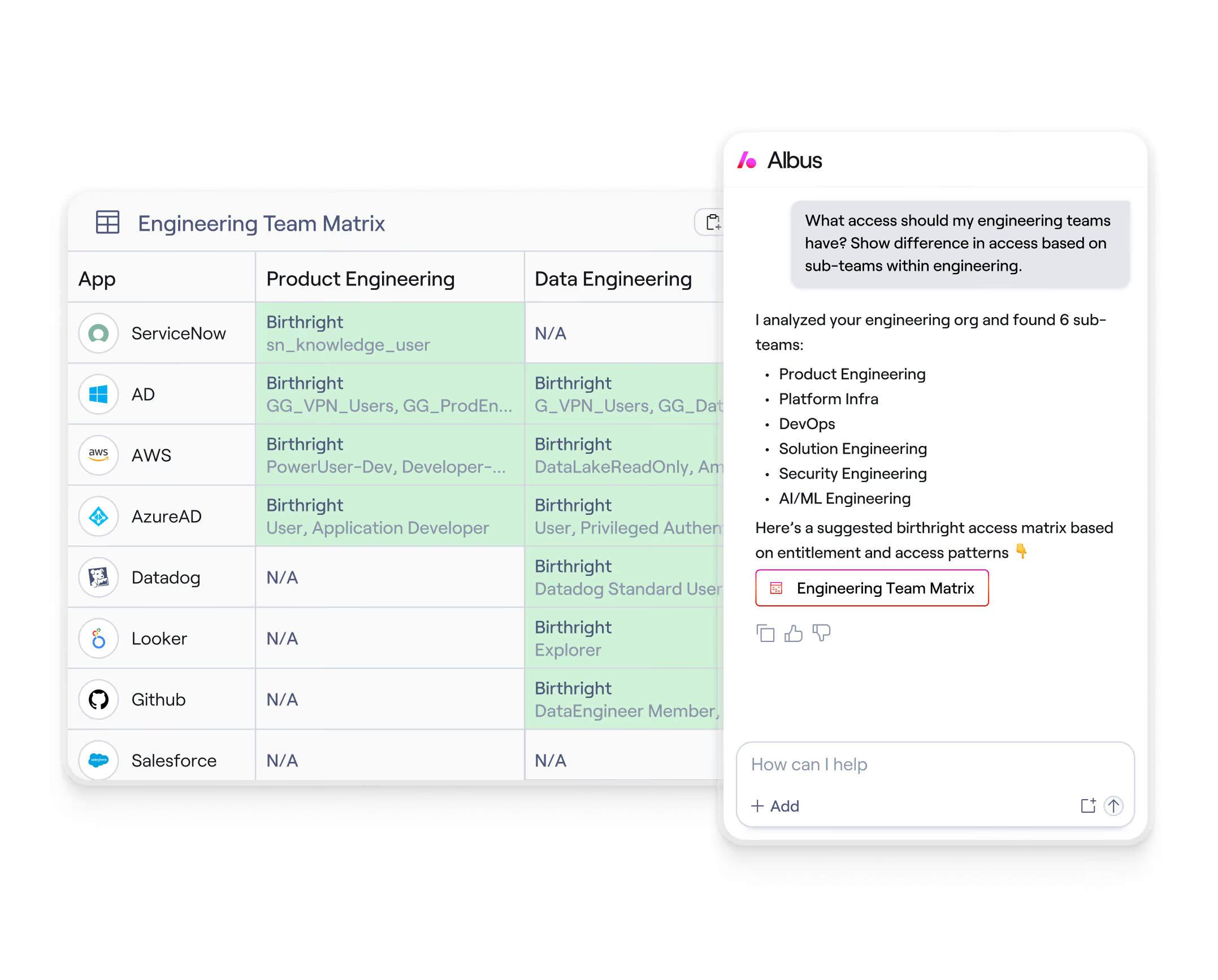
Turn messy access policies into usable roles in weeks, not years
Albus ingests HRIS data, app assignments, and usage logs, then proposes clean RBAC/ABAC policies. It explains why each role exists so you can tune assumptions instead of rubber-stamping them.
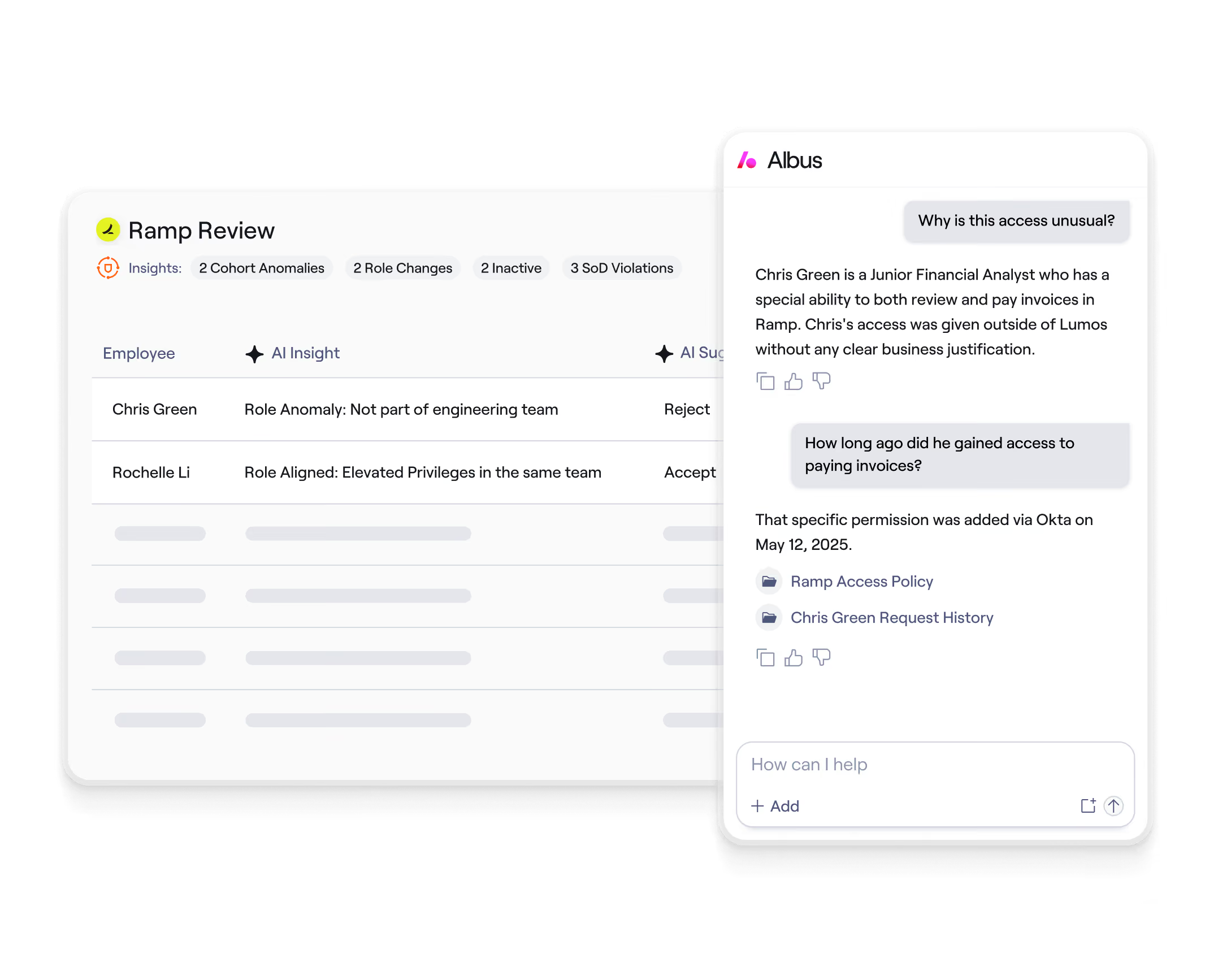
Complete access reviews 7x faster
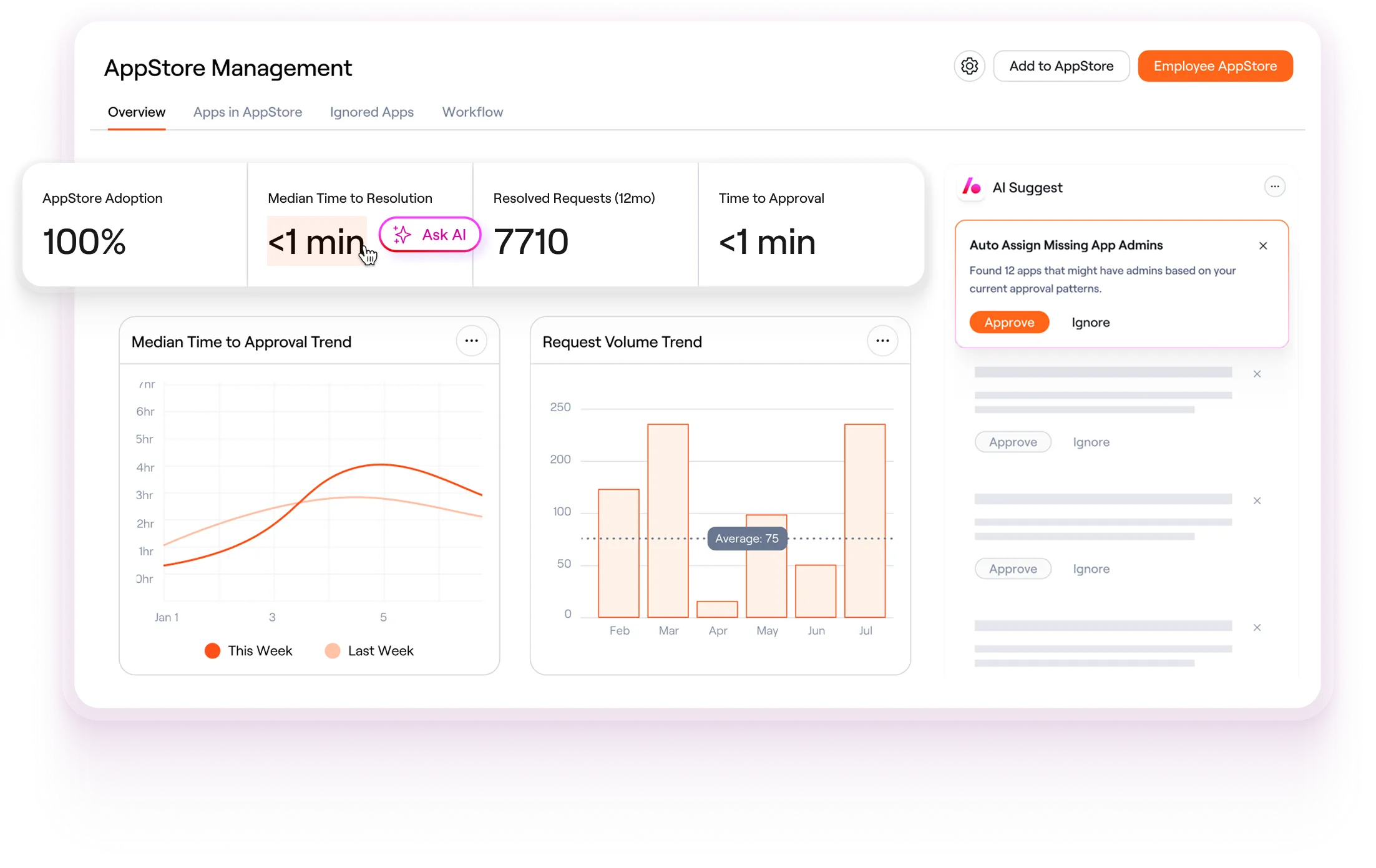
Albus approves or flags access using peer-group analysis and usage anomalies, while you stay in control of the judgment calls. It focuses reviewers on deltas (what actually changed since the last cycle) and auto-captures evidence.
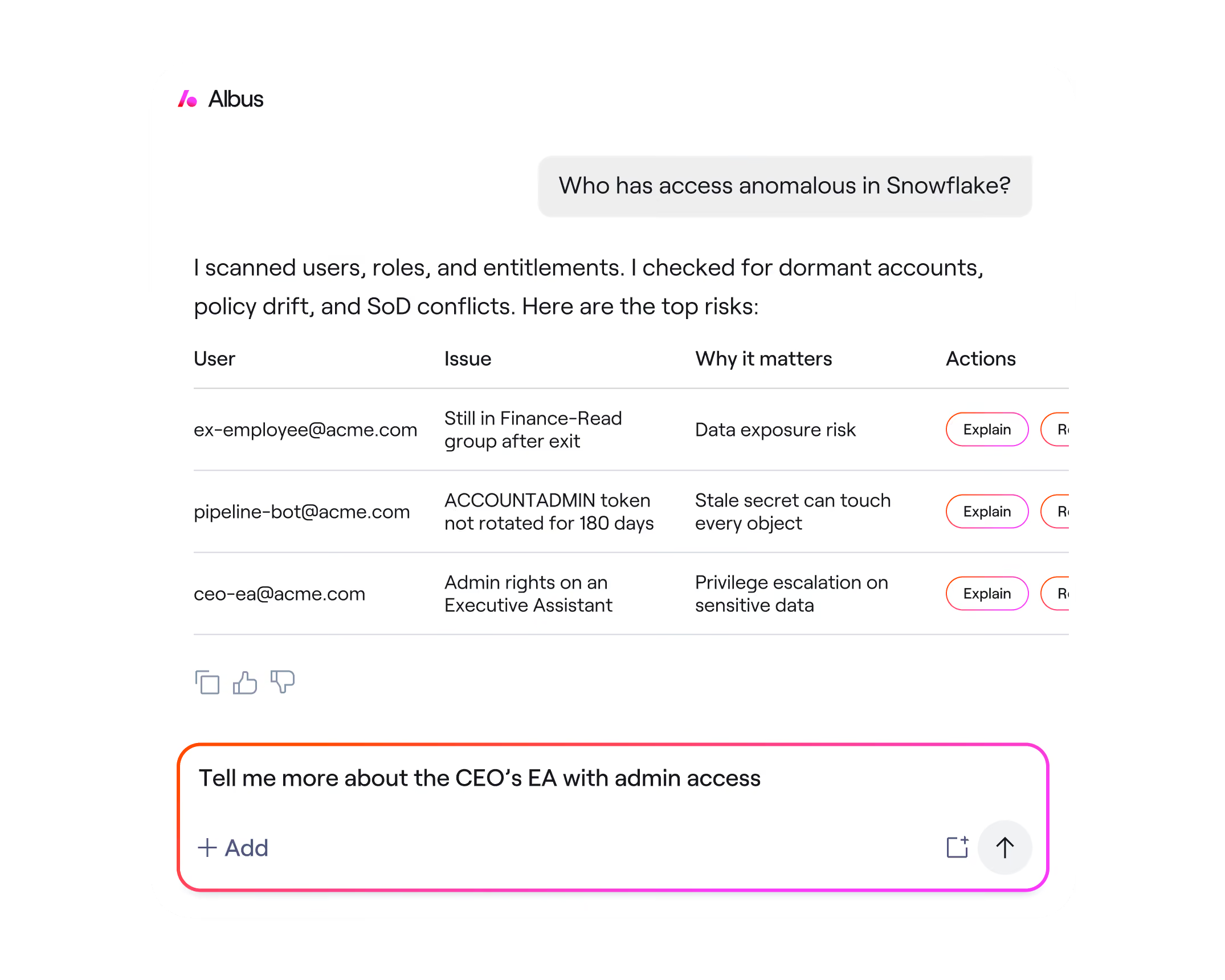
Investigate 10x faster with LLM-based identity analyst
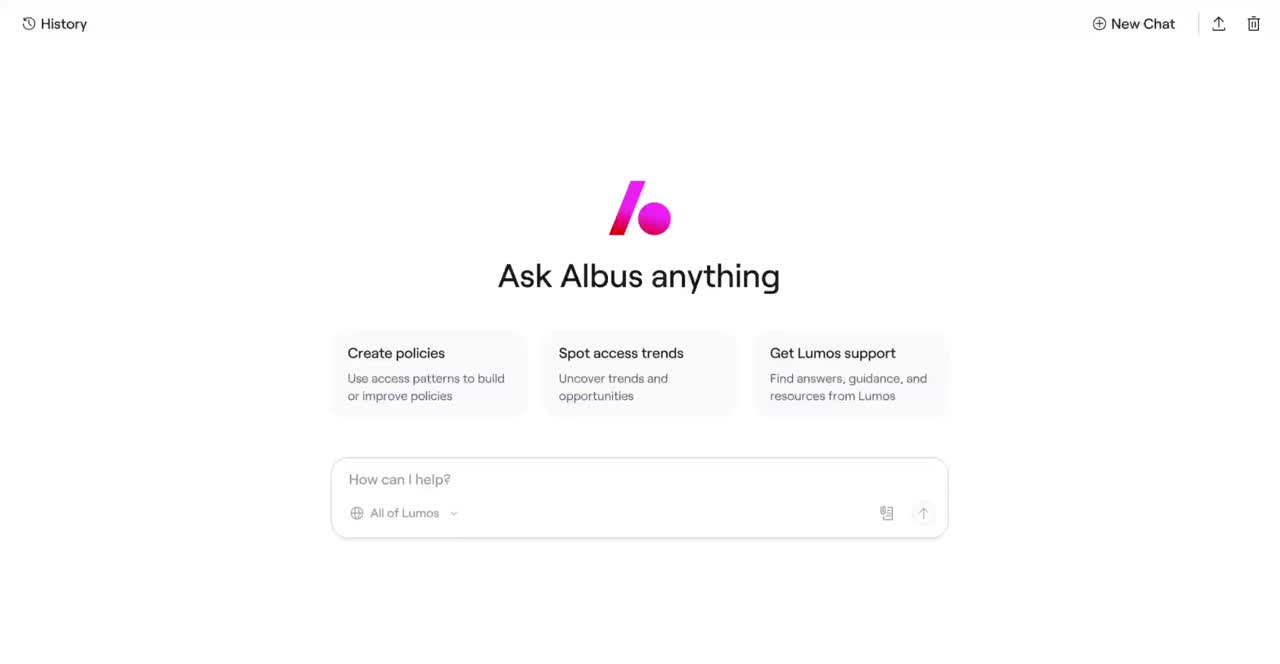
Ask natural-language questions and Albus scans users, apps, and entitlements to find dormant accounts, policy drift, and SoD violations. Get usage/peer/role baselines, impact-aware priorities, and uncover more risks faster with less noise.
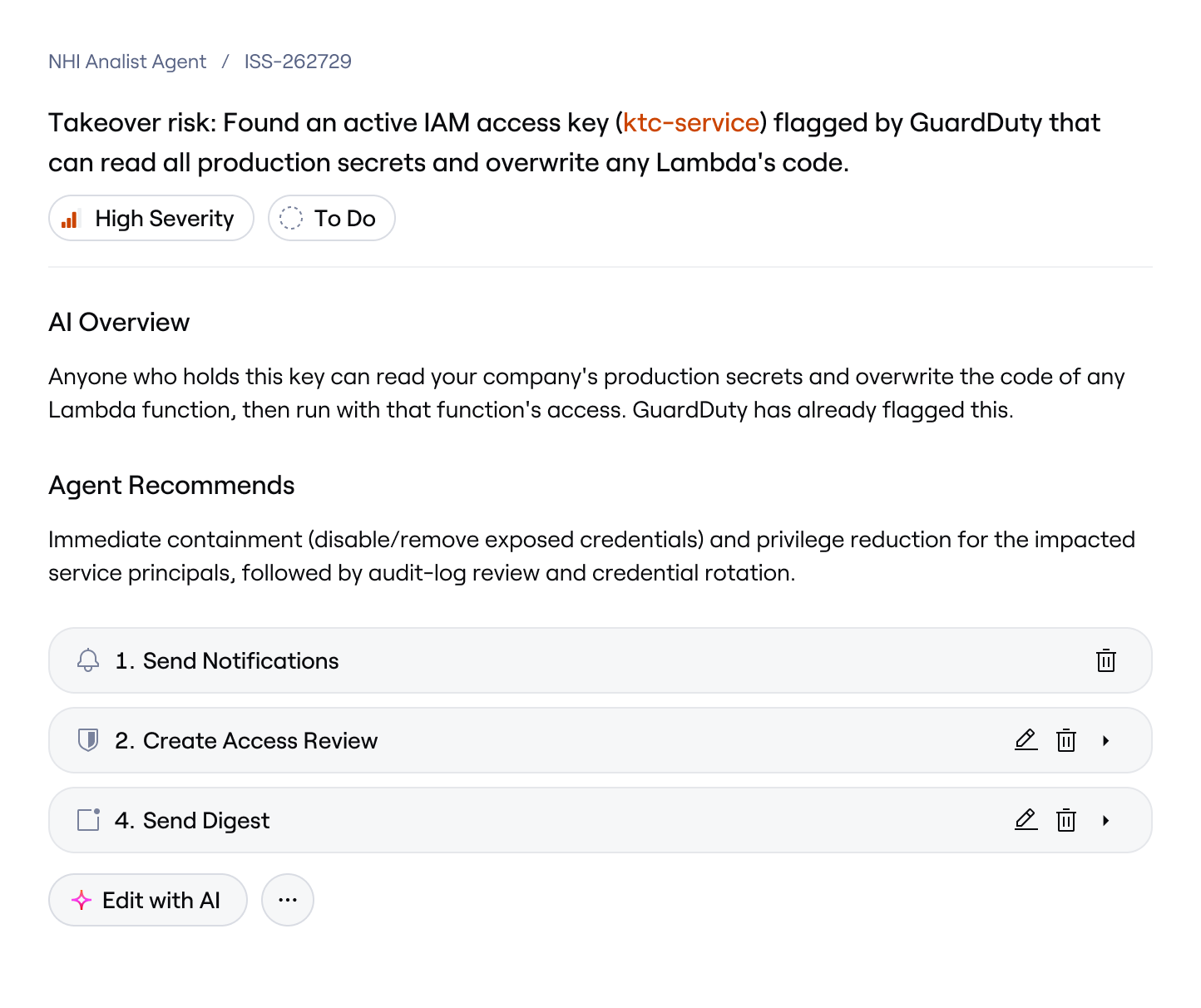
You stay in control
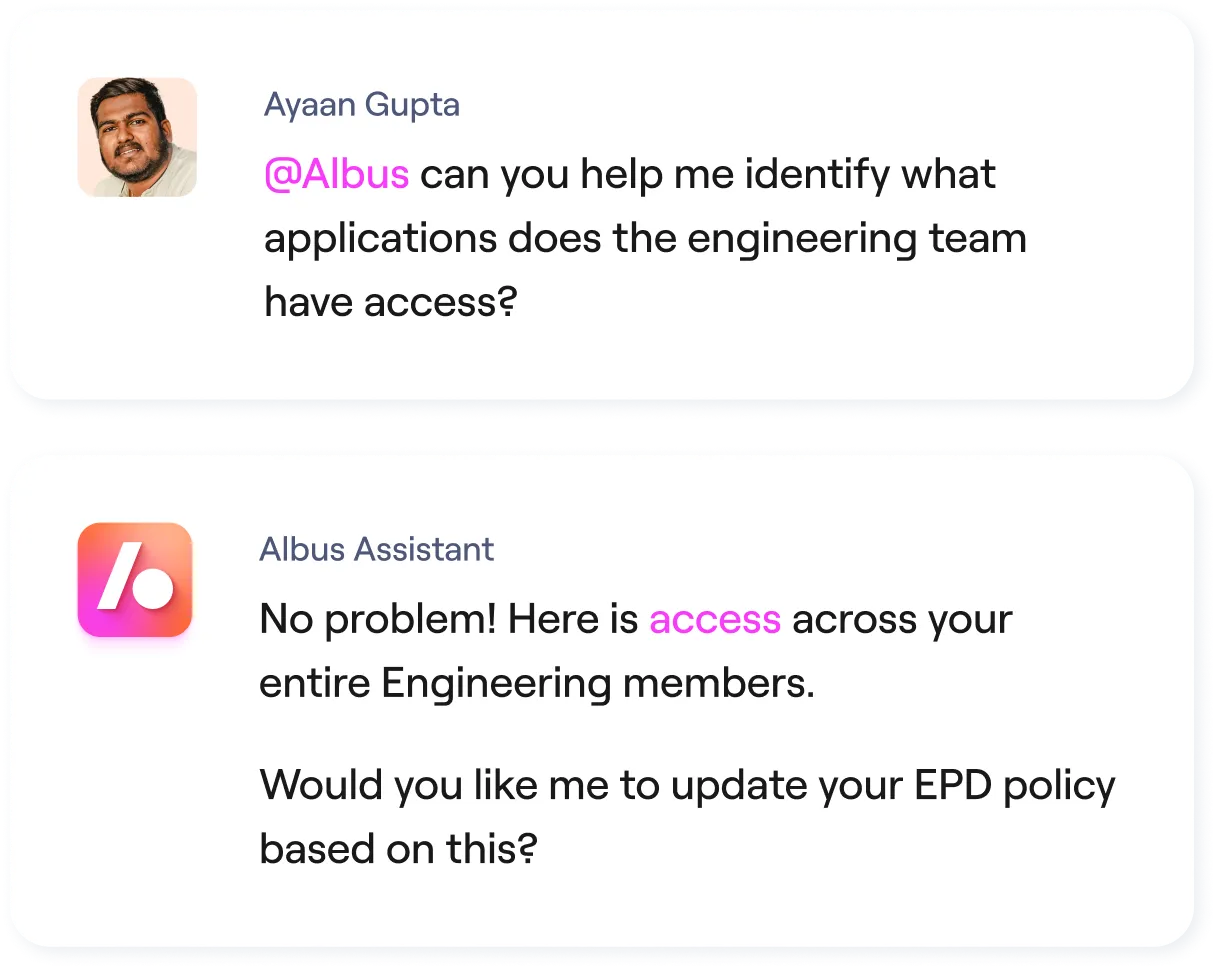
Start in copilot mode, with Albus surfacing recommendations for your approval . Albus logs every action, limits permissions to each workflow’s needs, and never trains on your data.











Additional Resources
Albus, The First AI Agent for Autonomous Identity Governance
How Albus helps organizations adopt identity governance and administration (IGA) at scale, without adding headcount.

Inside The Autonomous Identity Revolution
Learn why legacy IGA fails on visibility, access sprawl, manual process, and static roles — and what replaces it.
Frequently Asked Questions

An AI identity agent is software that actively performs identity governance tasks: building roles, closing access reviews, investigating risk, rather than just answering questions about them. Albus, Lumos's AI identity agent, analyzes access data, detects anomalies, and recommends or takes governance actions in real time, with humans approving the calls that need judgment.
Agentic identity governance and administration (IGA) uses AI agents to run governance workflows (role design, access reviews, investigations) continuously, instead of relying on scheduled, manual campaigns. Lumos delivers agentic IGA through Albus: humans design the policies and guardrails, and Albus executes the day-to-day work inside them.
A general chatbot answers questions from a broad model with no memory of your organization. Albus is built into Lumos's governance workflows: it holds context on your owners, approval routes, and past exceptions, and it's grounded in your actual entitlement data, not a description of it. See the comparison above.
Automating access reviews with AI means letting a system like Albus handle the repetitive parts of a review: surfacing peer-group and usage anomalies, flagging SoD violations, and pre-filling justifications, while reviewers focus only on the decisions that need human judgment. Lumos logs every action for audit evidence.
Segregation of Duties (SoD) violations occur when one person holds a combination of access rights that creates a fraud or error risk. For example, being able to both create and approve a payment. Albus flags risky access combinations during reviews and investigations by cross-referencing entitlements against defined SoD policies.



Don't let any identity become your next breach.
Govern every human, machine, and AI in your business with a free identity assessment today.
Book a Demo
The autonomous identity platform. Agents that continuously govern access for every human, machine, and AI.