
Top 15 IGA Solutions for 2025
Explore the top 15 Identity Governance and Administration (IGA) solutions for 2025. Compare features, use cases, and strengths to find the best platform for securing access, ensuring compliance, and managing identity at scale.


As organizations scale and shift deeper into the cloud, identity governance has become the linchpin of enterprise security. IT and security leaders are no longer just managing access—they're navigating a high-stakes balancing act between productivity, compliance, and risk.
That’s where modern Identity Governance and Administration (IGA) solutions come in. The right IGA tool doesn’t just automate provisioning or simplify access reviews—it helps you enforce least-privilege policies, streamline audits, and maintain full visibility over who has access to what, and why.
In this guide, we break down the top 13 IGA solutions for 2025, each offering a unique approach to access governance. Whether you’re a fast-scaling SaaS company or a compliance-heavy enterprise, this list will help you navigate the market and choose the right platform to support your identity strategy for the future.
What are the top IGA Solutions?
- Lumos
- Okta
- SailPoint
- OneLogin
- Oracle
- Saviynt
- Omada Identity
- One Identity
- Ping Identity
- IBM
- Microsoft Entra
- Opal Security
- ConductorOne
- Zluri
- EmpowerID
What is and Identity Governance (IGA) Solution?
An Identity Governance and Administration (IGA) solution is a platform that enables organizations to manage, monitor, and control user access to applications, systems, and data across their entire environment. It unifies identity lifecycle management – the process of creating, modifying, and removing user accounts – with governance controls that enforce policies, ensure compliance, and reduce security risks.
At its core, IGA provides a centralized framework for answering critical security questions like “Who has access to what?” and “Should they still have it?” It automates and streamlines essential identity processes such as:
- User provisioning and deprovisioning to onboard and offboard employees securely and efficiently.
- Access reviews and certifications to validate that users retain only the permissions necessary for their roles.
- Policy-based access control using roles, attributes, and risk context to enforce least-privilege access.
- Detection and remediation of excessive or inappropriate access through continuous monitoring.
- Compliance and audit readiness by maintaining complete records of access changes and approvals.
Modern IGA solutions offer visibility, automation, and intelligence across hybrid, cloud, and on-premise environments. They enable IT, security, and compliance teams to manage access at scale, reducing human error while maintaining agility and control.
Top 15 IGA Solutions in 2025
Choosing the right Identity Governance and Administration (IGA) solution is critical for any organization looking to strengthen security, simplify compliance, and reduce operational overhead. Modern IGA tools go far beyond traditional identity and access management—they help automate provisioning, enforce least-privilege policies, and provide the visibility needed to stay ahead of risk and regulatory demands.
To help you evaluate your options, we’ve put together a curated list of the top IGA solutions for 2025—featuring platforms that lead the way in usability, scalability, and intelligent automation.
- Lumos
- Okta
- SailPoint
- OneLogin
- Oracle
- Saviynt
- Omada Identity
- One Identity
- Ping Identity
- IBM Security
- Microsoft Entra
- Opal Security
- ConductorOne
- Zluri
- EmpowerID
1. Lumos
Lumos is a modern identity management company that helps organizations manage their employees' access to apps and data with a unified platform approach. Companies like Mars and GitHub use Lumos to boost productivity by ensuring employees get the right access at the right time, cut unnecessary app spend by removing stale licenses and duplicate software, and reduce risk by mitigating identity-related attacks.
- G2 rating: 4.8/5
- Price: Starts at $1/month per user (varies by feature set)
- Best for: Mid-size and enterprise organizations looking to automate employee lifecycle management, streamline self-service access requests, accelerate user access reviews and cut down app spend wastage.
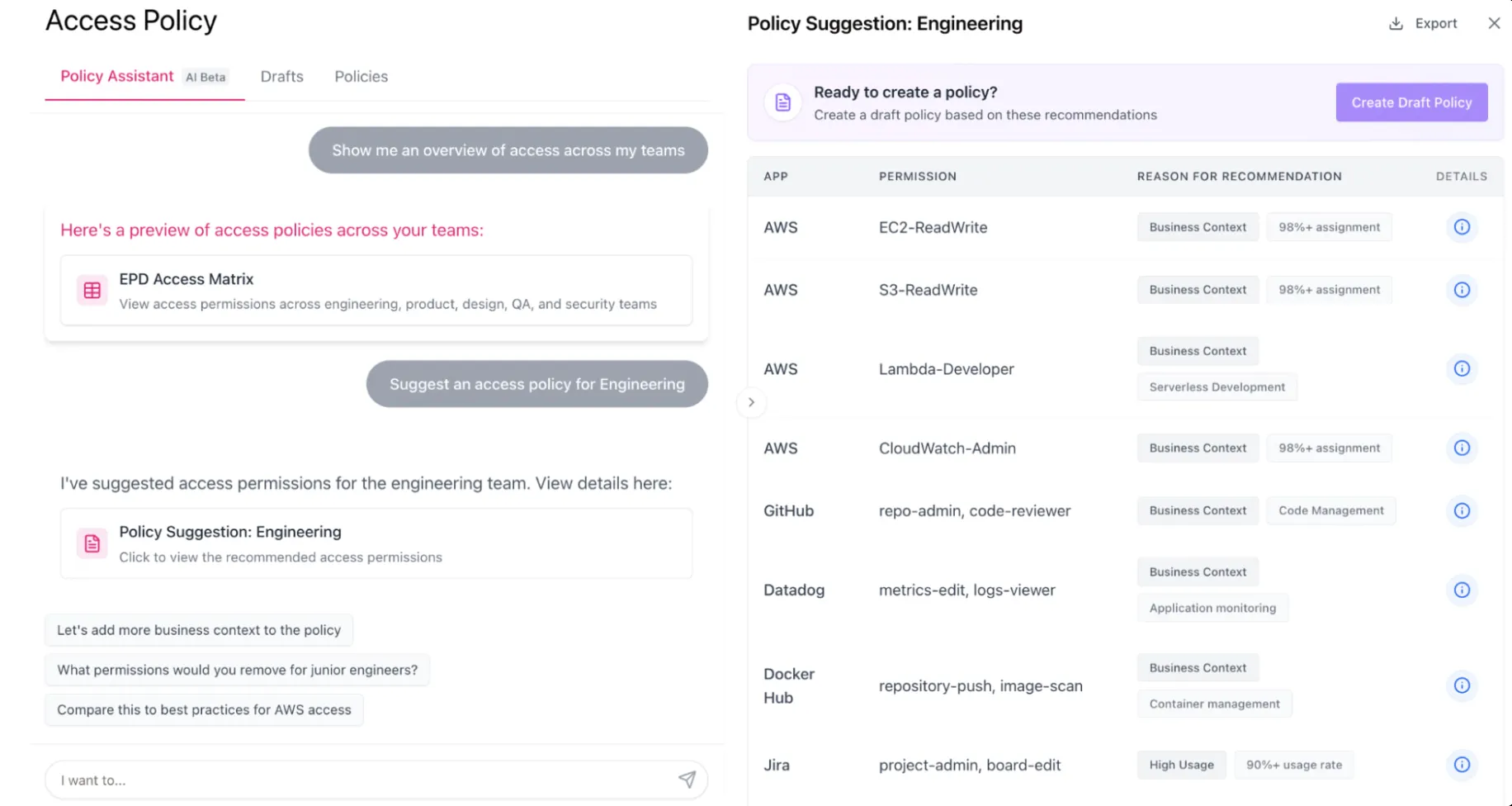
Lumos drives significant productivity and security gains for customers with automated joiner-mover-leaver provisioning workflows, just-in-time access for privileged entitlements, and automated user access reviews - all within a single platform that costs 20% of traditional solutions and is 10x faster with AI-powered implementation. Lumos also recently announced Albus - the first AI Agent for Autonomous Identity Governance.
Key Features:
- Centralized Access Visibility: Answer the question of who has access to what apps and data with continuous access monitoring and deep integrations across your critical systems.
- Accelerated Access Reviews: Say goodbye to spreadsheets—automatically ingest access data, detect Segregation of Duty (SoD) violations, streamline user reviews, remediate risky accesses, and generate audit-ready reports.
- End-to-End Lifecycle Management: Ensure employees have the right access — instantly. Automate onboarding, mover and offboarding workflows with group- and entitlement-level provisioning based on RBAC and ABAC controls.
- Seamless User Experience: Create great employee experiences, while giving the right access for the right amount of time. Let users request fine-grained, just-in-time access via a Web AppStore, CLI, Slack or Teams, and in your ITSM.
To learn more about how Lumos can help your organization with identity and access management, book a demo today.
2. Okta
Okta is a leading identity governance and access management platform that enables organizations to securely manage user identities and control access to applications, systems, and data. Widely recognized for its robust security features and deep integration capabilities, Okta offers a comprehensive suite of tools—from SSO and MFA to advanced provisioning and lifecycle management—making it a top choice for enterprises navigating complex IT environments.
- G2 rating: 4.5/5
- Price: Starts at $2/month per user (pricing varies by features and tiers)
- Best for: Enterprises of all sizes seeking a scalable, cloud-native identity platform with strong governance and automation capabilities.

Okta helps simplify identity governance by centralizing access control and automating user lifecycle tasks. Its expansive integration network—spanning thousands of applications—alongside support for custom workflows, makes it a powerful IGA solution for modern, hybrid, and multi-cloud enterprises.
Key Features:
- Single Sign-On (SSO): Centralizes access with one set of credentials across all integrated applications.
- Multi-Factor Authentication (MFA): Enhances security with layered authentication based on user behavior and context.
- Lifecycle Management: Automates provisioning, deprovisioning, and role changes using integrations with HR systems and directories.
- Universal Directory: Centralized identity store that supports custom attributes, schemas, and cross-platform syncing.
- Access Governance: Supports access requests, policy enforcement, and user access reviews for improved compliance.
- Risk-Based Authentication: Uses contextual signals (location, device, IP) to dynamically adjust access controls.
3. SailPoint
SailPoint is a dedicated Identity Governance and Administration (IGA) platform built to deliver deep visibility, automation, and control over user access across cloud, SaaS, and on-premise systems. Known for its enterprise-grade capabilities and policy-driven approach, SailPoint is trusted by global organizations to manage complex identity environments, enforce compliance, and reduce risk.
- G2 rating: 4.4/5
- Price: Custom pricing based on deployment and feature needs
- Best for: Large enterprises and highly regulated industries requiring robust identity governance, compliance enforcement, and granular access control.
SailPoint helps organizations secure access to critical resources by leveraging AI and machine learning to automate identity decisions, detect anomalies, and streamline access certifications. It’s a top choice for companies with complex compliance mandates or those managing a high volume of identities—both human and non-human.

Key Features:
- IdentityNow Platform: Cloud-native platform offering IGA as-a-service with faster deployment and lower maintenance.
- AI-Driven Access Insights: Uses machine learning to recommend least-privilege access, detect policy violations, and reduce over-provisioning.
- Access Certification: Automates user access reviews to help meet audit and compliance requirements with full traceability.
- Policy and Role Management: Enables organizations to define and enforce access policies based on roles, attributes, and risk levels.
- Lifecycle Management: Automates joiner, mover, and leaver workflows with deep integration into HR systems and directories.
- Separation of Duties (SoD): Prevents conflicts in access permissions across sensitive systems with built-in policy enforcement.
4. OneLogin
OneLogin is a cloud-based identity and access management (IAM) platform that offers a streamlined approach to managing user identities, securing access, and enforcing policies across SaaS and on-prem applications. With a strong reputation for ease of use and rapid deployment, OneLogin delivers a reliable IGA-lite solution that balances user experience with enterprise-grade security.
- G2 rating: 4.4/5
- Price: Starts at $2/month per user (varies by feature set)
- Best for: Mid-sized to large organizations looking for fast, centralized identity management with strong SSO, MFA, and provisioning capabilities.
OneLogin simplifies access governance by giving IT teams centralized control over who can access what—while making it easier for employees to securely log in to the tools they need. Its intuitive admin dashboard and strong directory integrations make it an attractive option for organizations with limited resources or those just beginning their IGA journey.

Key Features:
- Single Sign-On (SSO): Enables users to securely access all approved apps with a single set of credentials.
- Multi-Factor Authentication (MFA): Adds contextual, risk-based authentication to reduce the likelihood of credential misuse.
- User Provisioning & Deprovisioning: Automates onboarding and offboarding by syncing with HR systems and directories.
- SmartFactor Authentication: Uses machine learning to assess login risks and adjust security dynamically.
- Adaptive Authentication: Adjusts authentication requirements based on user behavior, location, and device.
- Access Request Workflow: Supports approval-based access requests for non-birthright entitlements.
5. Oracle
Oracle Identity Governance is a comprehensive enterprise-grade IGA solution built to manage the full lifecycle of user identities across complex IT environments. As part of the Oracle Identity Management suite, it offers deep integration with Oracle applications and infrastructure, while also supporting a wide range of third-party systems. With its focus on scalability, compliance, and process automation, Oracle is a strong fit for organizations with complex access requirements and strict regulatory needs.
- G2 rating: 3.7/5
- Price: Custom pricing based on deployment model and enterprise size
- Best for: Large enterprises, especially those already within the Oracle ecosystem, seeking robust governance, auditing, and automation capabilities.
Oracle Identity Governance provides centralized identity management with flexible, policy-driven workflows that support everything from joiner/mover/leaver events to access certifications and audit preparation. It’s highly customizable, making it ideal for organizations with unique security and compliance mandates.

Key Features:
- Identity Lifecycle Management: Automates the entire user lifecycle—provisioning, role changes, and deprovisioning—across cloud and on-prem systems.
- Access Request and Approval Workflow: Enables self-service access requests with configurable approval chains and policy enforcement.
- Access Certification: Supports periodic and event-driven access reviews with full audit trails and remediation tracking.
- Role Management: Offers advanced role mining and modeling to support dynamic role creation and maintenance.
- Separation of Duties (SoD): Detects and prevents conflicting access rights through pre-built policy frameworks.
- Integration with Oracle Ecosystem: Natively connects with Oracle Cloud and legacy Oracle applications, reducing deployment friction for existing Oracle customers.
6. Saviynt
Saviynt is a cloud-native Identity Governance and Administration (IGA) platform designed to help organizations secure identities, manage access, and meet complex compliance requirements—especially in hybrid and multi-cloud environments. Known for its flexibility, breadth of integrations, and strong compliance features, Saviynt delivers a scalable solution suited to modern enterprises navigating rapid digital transformation.
- G2 rating: 4.2/5
- Price: Custom pricing based on user volume and features
- Best for: Enterprises with complex compliance mandates and hybrid IT environments seeking fine-grained, cloud-first identity governance.
Saviynt provides unified identity governance across SaaS, IaaS, and on-prem applications. It stands out for its risk-based access control capabilities, intelligent analytics, and a high degree of configurability. Saviynt’s cloud-first architecture also allows for faster deployment and lower infrastructure overhead compared to legacy IGA systems.

Key Features:
- Lifecycle Management: Automates user onboarding, offboarding, and role changes across diverse IT ecosystems.
- Risk-Based Access Controls: Evaluates access requests and entitlements using risk scores and context-aware policies.
- Access Reviews and Certifications: Streamlines periodic reviews and enables detailed auditing for regulatory compliance.
Application Access Governance: Extends governance to SaaS platforms like Workday, Salesforce, and ServiceNow, with deep, out-of-the-box integrations. - Privileged Access Management (PAM) Integration: Provides governance over privileged accounts alongside standard user identities.
- Cloud Infrastructure Entitlement Management (CIEM): Offers advanced visibility and control over cloud entitlements in AWS, Azure, and GCP environments.
7. Omada Identity
Omada Identity is a modern Identity Governance and Administration (IGA) platform built to help organizations enforce least-privilege access, simplify compliance, and reduce identity-related risk at scale. With a strong emphasis on policy-based automation, access governance, and streamlined lifecycle management, Omada is a top choice for enterprises looking to modernize their identity strategy without the bloat of legacy systems.
- G2 rating: 4.4/5
- Price: Custom pricing depending on deployment and features
- Best for: Mid-sized to large enterprises seeking efficient, policy-driven identity governance with strong compliance support.
Omada delivers a purpose-built IGA solution that balances flexibility with control. Whether deployed in the cloud or on-prem, Omada focuses on accelerating time-to-value by providing pre-configured governance frameworks, best practices, and out-of-the-box integrations with popular business applications.

Key Features:
- Identity Lifecycle Management: Automates user onboarding, role changes, and offboarding with clear access policies and rules.
- Policy-Based Access Control: Centralizes policy enforcement to ensure only the right people have the right access—no more, no less.
- Access Reviews and Recertifications: Enables automated, auditable access certification campaigns that meet regulatory and internal audit needs.
- Role Management and Optimization: Supports role modeling, mining, and clean-up to help reduce over-permissioning and role sprawl.
- Segregation of Duties (SoD): Built-in SoD controls help prevent toxic access combinations and meet compliance requirements.
- Business-Friendly UX: Designed to be usable by both technical teams and business stakeholders, improving adoption and accountability.
8. One Identity
One Identity is an enterprise-grade Identity Governance and Administration (IGA) solution designed to simplify and secure identity management across on-premises, hybrid, and multi-cloud environments. Backed by decades of identity expertise, One Identity delivers a modular platform that covers identity lifecycle management, access governance, privileged account control, and more—all in one unified framework.
- G2 rating: 4.3/5
- Price: Custom pricing based on deployment model and features
- Best for: Large organizations and regulated industries looking for comprehensive IGA with strong integration and policy enforcement capabilities.
One Identity empowers IT and security teams to enforce least-privilege access, meet compliance demands, and reduce identity-related risk. Its modular architecture enables organizations to start small and scale their governance programs over time, with optional components for Privileged Access Management (PAM), Active Directory management, and SaaS governance.

Key Features:
- Identity Lifecycle Automation: Automates provisioning, deprovisioning, and access updates using workflows tied to business processes and HR data.
- Access Certification: Delivers powerful access review capabilities with detailed audit trails for internal and external compliance.
- Role and Policy Management: Supports sophisticated role modeling, SoD policies, and dynamic access controls to enforce least-privilege.
- Privileged Access Governance: Integrates with One Identity Safeguard for full visibility and control over privileged users.
- Unified Identity Platform: Consolidates identity administration across on-prem, cloud, and hybrid environments under one control pane.
- Integration and Extensibility: Offers deep integration with Active Directory, SAP, ServiceNow, and a broad ecosystem of business applications.
9. Ping Identity
Ping Identity is a cloud-friendly identity and access management platform that offers a growing suite of Identity Governance and Administration (IGA) capabilities—designed for organizations prioritizing both seamless user experiences and strong security controls. While traditionally known for its robust authentication and federation tools, Ping has expanded into identity governance with features that support access control, role management, and lifecycle automation.
- G2 rating: 4.3/5
- Price: Custom pricing based on users, features, and deployment scale
- Best for: Enterprises focused on secure access and user experience, especially those with complex hybrid or multi-cloud architectures.
Ping Identity enables organizations to provide secure, frictionless access for employees, customers, and partners while layering in governance and policy enforcement. It’s a strong fit for enterprises that want to unify identity across digital ecosystems without sacrificing flexibility or user experience.

Key Features:
- Single Sign-On (SSO): Centralized, secure access across all apps with robust identity federation capabilities.
- Multi-Factor Authentication (MFA): Contextual, adaptive authentication to protect high-risk access points.
- Identity Lifecycle Management: Automates joiner/mover/leaver workflows through integrations with HR systems and directories.
- Access Intelligence: Provides visibility into who has access to what, when, and why—supporting audit and compliance needs.
- Dynamic Authorization: Enables real-time, fine-grained access control based on user attributes, risk signals, and policy conditions.
- API Security & Customer Identity (CIAM): Extends governance and security to customers and developers with identity APIs and CIAM tools.
10. IBM Security
IBM Security Verify Governance (formerly IBM Identity Governance and Intelligence) is a robust enterprise Identity Governance and Administration (IGA) solution designed to provide end-to-end identity lifecycle management, access governance, and compliance reporting. Built with the scalability and security that large enterprises demand, IBM’s IGA offering integrates seamlessly with existing infrastructure and emphasizes risk-aware access controls, advanced analytics, and deep compliance support.
- G2 rating: 4.2/5
- Price: Custom pricing depending on organization size and deployment scope
- Best for: Large enterprises and highly regulated industries requiring advanced identity analytics, strong compliance capabilities, and integration with IBM’s broader security portfolio.
IBM Security Verify Governance offers a holistic approach to identity governance, enabling organizations to make smarter access decisions, automate lifecycle processes, and improve audit readiness. It’s particularly well-suited for organizations already invested in IBM’s ecosystem or seeking AI-enhanced identity insights.

Key Features:
- Automated Lifecycle Management: Streamlines user provisioning, deprovisioning, and access updates through policy-driven workflows.
- Access Governance & Certification: Enables periodic and event-driven access reviews with built-in auditing and remediation tools.
- Risk-Based Access Intelligence: Uses AI and machine learning to detect anomalies, prioritize risk, and suggest access rights.
- Role Modeling & Mining: Helps organizations discover optimal access roles and clean up over-provisioned accounts.
- Separation of Duties (SoD) Enforcement: Detects and prevents conflicting access rights to reduce the risk of internal threats.
- Enterprise Integration: Offers deep integration with IBM Cloud Pak for Security, QRadar, and a wide array of third-party enterprise applications.
11. Microsoft Entra ID
Microsoft Entra ID Governance (formerly Azure AD Identity Governance) is Microsoft’s integrated Identity Governance and Administration (IGA) solution, designed to work seamlessly across Microsoft 365, Azure, and thousands of connected SaaS and on-prem applications. Built natively into the Entra identity platform, it enables IT and security teams to automate access decisions, manage user lifecycles, and enforce compliance—all from within the broader Microsoft ecosystem.
- G2 rating: 4.4/5
- Price: Included in Microsoft Entra ID Premium P2 (pricing starts at $9/user/month)
- Best for: Organizations already using Microsoft 365 or Azure that want integrated, cloud-native identity governance with strong automation and compliance capabilities.
Entra ID Governance simplifies identity management by aligning with HR and IT processes and using Microsoft’s robust cloud infrastructure to scale access control, automate reviews, and integrate with native tools like Teams, PowerShell, and Defender for Identity.

Key Features:
- Access Reviews: Automates periodic and on-demand reviews of user and group access, with customizable workflows and automated expiration of stale permissions.
- Entitlement Management: Enables role-based access packages for employees, contractors, and partners—supporting secure external collaboration.
- Lifecycle Workflows: Automates joiner, mover, and leaver events using HR-driven triggers and attribute-based policies.
- Privileged Identity Management (PIM): Enforces just-in-time (JIT) privileged access with approval workflows and time-bound permissions.
- Access Insights: Leverages Microsoft Graph and Azure AD logs to provide actionable access intelligence and audit trails.
- Seamless Integration: Deeply integrated with Microsoft 365, Azure, Teams, Intune, and Defender—ideal for organizations standardizing on Microsoft.
12. Opal Security
Opal Security is a modern, developer-friendly Identity Governance and Administration (IGA) platform designed for cloud-first organizations that prioritize agility, automation, and user experience. Known for its intuitive interface and event-driven architecture, Opal helps teams manage access at scale while maintaining least-privilege principles, streamlining reviews, and improving visibility across dynamic environments.
- G2 rating: 4.8/5
- Price: Custom pricing based on users and features
- Best for: Fast-growing, engineering-heavy organizations looking for a lightweight, flexible IGA platform that integrates deeply with modern infrastructure and developer tools.
Opal differentiates itself by focusing on real-time access governance, offering strong support for both human and non-human identities. It’s designed for teams that want to move fast without sacrificing control—making it ideal for modern DevOps and security teams managing complex cloud-native stacks.

Key Features:
- Just-in-Time Access Requests: Provides temporary, time-bound access that reduces over-permissioning and eliminates standing privileges.
- Access Reviews: Streamlines reviews through automation, delta-based approvals, and rich contextual insights (usage, org structure, role).
- Role & Resource Modeling: Supports flexible access models based on team, project, or role, with custom policies tailored to business needs.
- Fine-Grained Permissions: Integrates with tools like GitHub, AWS, and Kubernetes to provide granular control over access to sensitive resources.
- Developer-First Experience: Offers APIs, CLI support, and Terraform modules to support Infrastructure as Code (IaC) workflows.
- Audit-Ready Visibility: Centralizes visibility into all access decisions with complete logs, access graphs, and event streams for auditing and compliance.
13. ConductorOne
ConductorOne is a cloud-native Identity Governance and Administration (IGA) platform built to help security and IT teams automate access control, enforce least privilege, and reduce identity risk—without the bloat of legacy systems. With a focus on usability, automation, and rapid deployment, ConductorOne is designed for modern SaaS environments and developer-heavy organizations looking to scale securely.
- G2 rating: 4.8/5
- Price: Custom pricing based on users and features
- Best for: Cloud-first companies seeking a flexible, intuitive IGA platform with fast time-to-value and deep SaaS integration.
ConductorOne delivers a user-friendly experience while solving core identity challenges like access reviews, request workflows, and lifecycle automation. Its event-driven model and native integrations make it an option for organizations juggling hundreds of SaaS apps and dynamic access needs. You can also read our blog to find viable ConductorOne alternatives.

Key Features:
- Automated Access Reviews: Streamlines the review process with intelligent suggestions, delta-based reviews, and full audit trails.
- Least Privilege Enforcement: Enables time-bound access, access expirations, and policy enforcement to eliminate unnecessary privileges.
- Self-Service Access Requests: Users can request access via Slack or web portal with automated approvals and customizable workflows.
- Lifecycle Management: Supports joiner, mover, and leaver workflows driven by HRIS or identity provider changes.
- Comprehensive Integrations: Offers native support for hundreds of SaaS apps, infrastructure tools, and identity providers like Okta, Azure AD, and Google Workspace.
- Developer-Friendly: Provides APIs, CLI tools, and Terraform support for teams practicing Infrastructure as Code (IaC).
14. Zluri
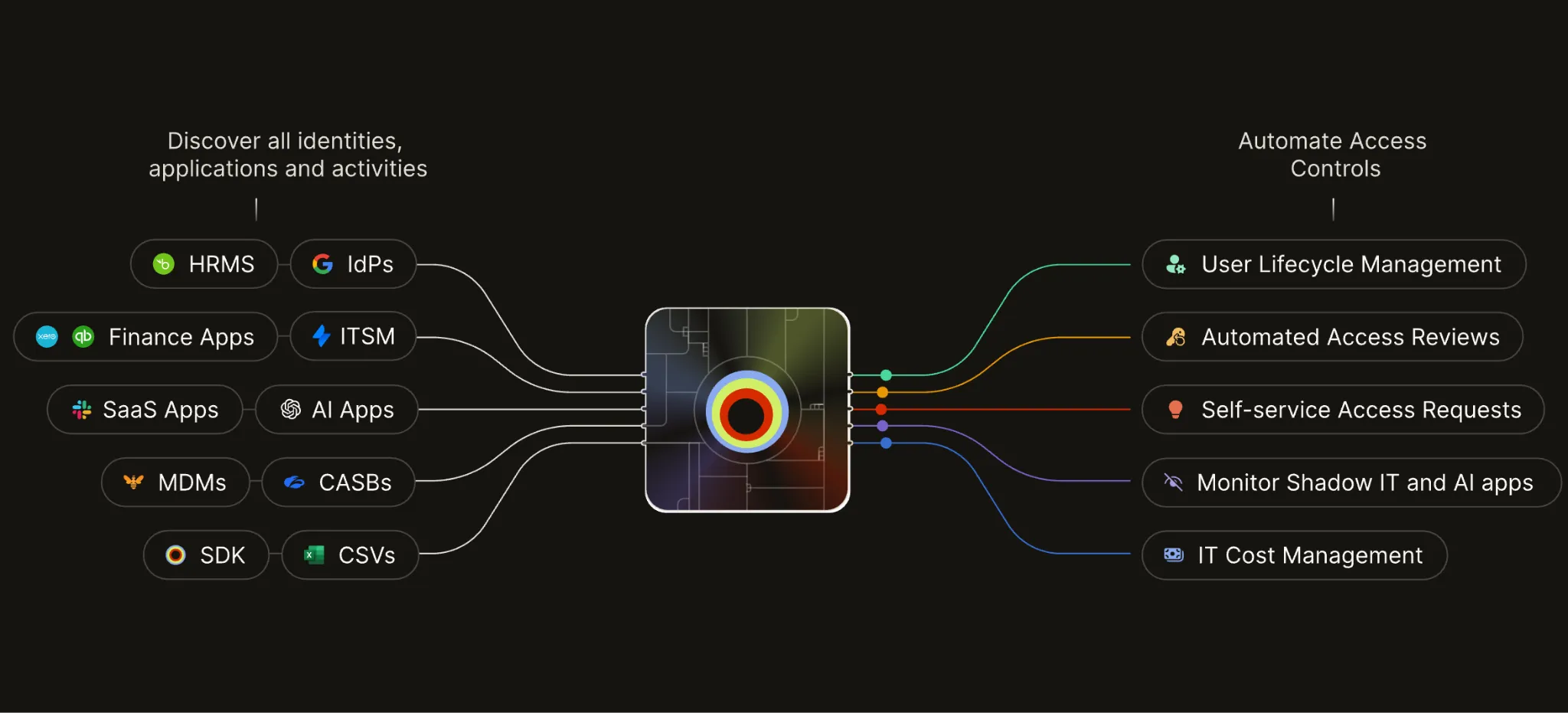
Zluri is a modern SaaS management and identity governance platform designed to help organizations discover, manage, and secure access across their entire application ecosystem. Positioned as an automation-first solution, Zluri enables IT and security teams to streamline identity lifecycle management, eliminate shadow IT, and gain deep visibility into software usage and entitlements. It’s particularly effective for companies with large SaaS portfolios and decentralized access models that need a unified governance layer.
- G2 Rating: 4.5/5
- Price: Custom pricing based on users and modules.
- Best for: Mid-market to large organizations looking to unify SaaS management and identity governance under a single automation platform.
Key Features:
- SaaS Discovery and Management: Automatically identifies all SaaS applications in use to centralize visibility and control.
- Identity Lifecycle Automation: Streamlines user provisioning, deprovisioning, and access reviews across hundreds of integrations.
- Access Reviews and Compliance Reporting: Automates review campaigns and evidence collection to support frameworks like SOC 2, ISO 27001, and HIPAA.
- Shadow IT Detection: Detects unsanctioned app usage, helping security teams minimize risk exposure and enforce governance.
- Usage and Spend Optimization: Tracks license utilization and user activity to reduce redundant subscriptions and optimize SaaS spend.
- Integration Library: Offers 1,500+ pre-built integrations, making it easy to orchestrate identity workflows across cloud services and enterprise systems.
15. EmpowerID
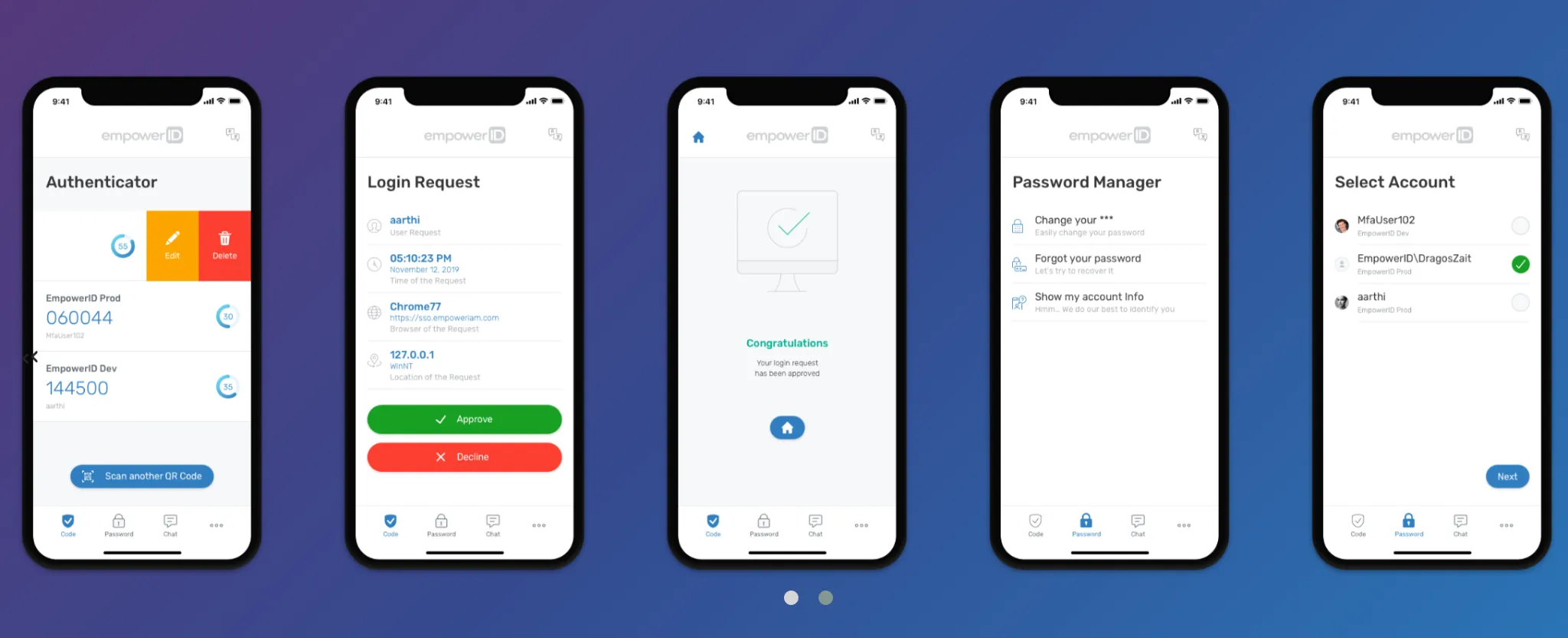
EmpowerID is a comprehensive identity and access management platform that unifies IGA, IAM, and PAM in a single, modular architecture. Known for its scalability and hybrid deployment flexibility, EmpowerID supports both cloud-native and on-premise environments with deep automation and granular policy control.
- G2 Rating: 3.4/5
- Price: Custom enterprise pricing based on deployment and module selection.
- Best for: Large enterprises requiring a unified governance solution that combines IAM, IGA, and PAM with robust automation and customization.
Key Features:
- Unified Identity Platform: Combines IGA, IAM, and PAM capabilities within a single interface to reduce silos and simplify governance.
- Workflow Automation: Includes over 1,000 configurable workflows for automating access requests, approvals, and remediation.
- Granular Role and Policy Controls: Supports RBAC, ABAC, and PBAC models, offering fine-grained access management tailored to dynamic environments.
- Hybrid and Multi-Cloud Support: Seamlessly manages access across Azure, AWS, Google Cloud, and on-prem systems.
- Compliance and Audit Readiness: Delivers continuous compliance monitoring, SoD enforcement, and detailed audit trails.
- Integration and Extensibility: Offers out-of-the-box connectors for major enterprise platforms like SAP, ServiceNow, and Microsoft 365, with extensible APIs for custom integrations.
Benefits of IGA Tools
As organizations scale across cloud, SaaS, and hybrid environments, Identity Governance and Administration (IGA) tools have become an essential part of a secure and efficient IT strategy. They don’t just help manage access—they streamline it, enforce policy, and bring clarity to what is often one of the most complex and fragmented areas of enterprise security. Here are the three core benefits of implementing a modern IGA solution:
- Enhanced Security
- Compliance Management
- Operational Efficiency
Enhanced Security
At its core, IGA is a security tool. By giving organizations visibility into who has access to what, IGA solutions help prevent unauthorized access, insider threats, and privilege creep. With capabilities like automated provisioning and deprovisioning, least-privilege enforcement, and real-time monitoring, IGA tools reduce the risk of over-permissioned accounts and access sprawl—two of the most common contributors to data breaches.
IGA also strengthens security by enabling segregation of duties (SoD), flagging potential conflicts in access rights before they become incidents. Whether it’s revoking access for a departed employee or ensuring that sensitive entitlements aren’t assigned without approval, IGA provides the guardrails to help security teams stay ahead of threats.
{{shadowbox}}
Compliance Management
Modern IGA tools are purpose-built for compliance-heavy environments. Whether you're governed by SOX, HIPAA, GDPR, or ISO standards, having a strong identity governance framework in place simplifies audit readiness. IGA platforms automate access reviews, enforce policy-driven access controls, and maintain detailed audit logs—so when regulators come knocking, the evidence is already there.
Instead of scrambling for spreadsheets or manually validating user access across dozens of systems, IGA gives compliance teams a centralized, consistent way to demonstrate policy enforcement and reduce the risk of non-compliance penalties.
Operational Efficiency
Access management is one of the most repetitive, ticket-heavy processes in IT—and IGA tools eliminate much of that manual work. By automating provisioning, approvals, and access certifications, IGA reduces the workload on IT and security teams and cuts down on delays for end users.
More importantly, IGA platforms integrate with existing HRIS and ITSM systems, allowing identity workflows to run end-to-end with minimal friction. The result? Faster onboarding, cleaner offboarding, and fewer hours wasted clicking through tickets and approvals. For orgs juggling hundreds of apps and thousands of identities, that adds up—fast.
How to Choose an IGA Tool
Choosing the right IGA tool isn’t just about checking boxes—it’s about finding a solution that can grow with your organization, align with your security and compliance needs, and actually work for the people who use it every day. With IGA becoming more essential (and more crowded) than ever, it’s critical for IT and security leaders to know what to look for.
Key Features for an IGA Tool
A modern IGA solution should go beyond basic provisioning. The best tools offer a comprehensive set of features that address both security and operational needs:
- Automated Provisioning and Deprovisioning – Reduce manual overhead and ensure the right access is granted or revoked at the right time.
- Access Reviews and Certifications – Streamline periodic reviews and ensure access aligns with current roles and responsibilities.
- Policy-Based Access Controls – Enforce least-privilege and separation of duties with role- or attribute-based policies.
- Self-Service Access Requests – Empower users to request access while keeping approvals tied to automated workflows.
- Audit Logs and Reporting – Provide detailed visibility into who had access, when, and why—for both internal oversight and regulatory compliance.
- Integration with HRIS, ITSM, and IAM Systems – Seamlessly connect identity workflows across your ecosystem.
Important Criteria for Evaluating IGA Solutions
With the basics in place, the next step is evaluating which IGA tool actually meets your organization's needs. Here’s what to weigh:
- Scalability and Flexibility – Can the tool handle your current complexity and scale as your business grows?
- Ease of Deployment and Use – Legacy IGA platforms are notorious for months-long deployments. Look for solutions that can be configured quickly and are intuitive for both admins and end users.
- Integration Coverage – Does it support the full range of SaaS, on-prem, and custom applications you use today?
- Visibility and Analytics – Does it offer real-time access visibility and usage insights to support better decisions?
- AI and Automation Capabilities – Can the tool help reduce role sprawl and automate policy creation using real data?
The right IGA platform doesn’t just secure your identities—it makes managing them smarter, faster, and less painful. Aim for solutions that reduce complexity while improving control.
IGA Solutions FAQs
1. What is an IGA solution?
IGA (Identity Governance and Administration) solutions help organizations manage and govern user access to systems, applications, and data. These tools provide features like automated provisioning and deprovisioning, access reviews, policy enforcement, and compliance reporting—ensuring that the right people have the right access at the right time.
2. How does an IGA tool differ from an IAM system?
While IAM (Identity and Access Management) focuses on authentication and access control, IGA adds a layer of governance. IGA emphasizes visibility, policy-based decision-making, and compliance, making it ideal for organizations that need to prove and enforce access controls across complex environments.
3. Why is IGA important for compliance?
IGA platforms help organizations meet regulatory requirements (like SOX, GDPR, HIPAA, and ISO) by automating access certifications, enforcing least-privilege principles, and maintaining comprehensive audit logs. These capabilities simplify audit prep and reduce the risk of non-compliance penalties.
4. What features should I look for in a modern IGA solution?
Key features include:
- Lifecycle automation (onboarding/offboarding)
- Role- and attribute-based access control
- Access request workflows and self-service portals
- Integration with HRIS, ITSM, and directory services
- Analytics for access visibility and usage
- AI-driven policy suggestions (in more advanced platforms)
5. Can IGA tools manage non-human identities?
Yes, many modern IGA tools are expanding to manage non-human identities, such as service accounts, bots, and APIs. These accounts can often be overlooked, but they pose the same security risks as human users—and require the same level of governance and oversight.






Don't let any identity become your next breach.
Govern every human, machine, and AI in your business with a free identity assessment today.
Book a Demo
The autonomous identity platform. Agents that continuously govern access for every human, machine, and AI.