
From Data to Decisions with Advanced Identity Analytics
Elevate your identity hygiene and posture analysis with interactive, customizable dashboards.

Trusted by the world's most innovative companies














Decisions Take Weeks Because Identity Data Is Scattered
Access data lives scattered across your IdP, HRIS, and hundreds of apps, so answering "who has this, and why" usually means a spreadsheet pull and a week of waiting. Identity Analytics puts that data in one place, in dashboards built for the question each team is actually asking.

Stay current without asking for a report
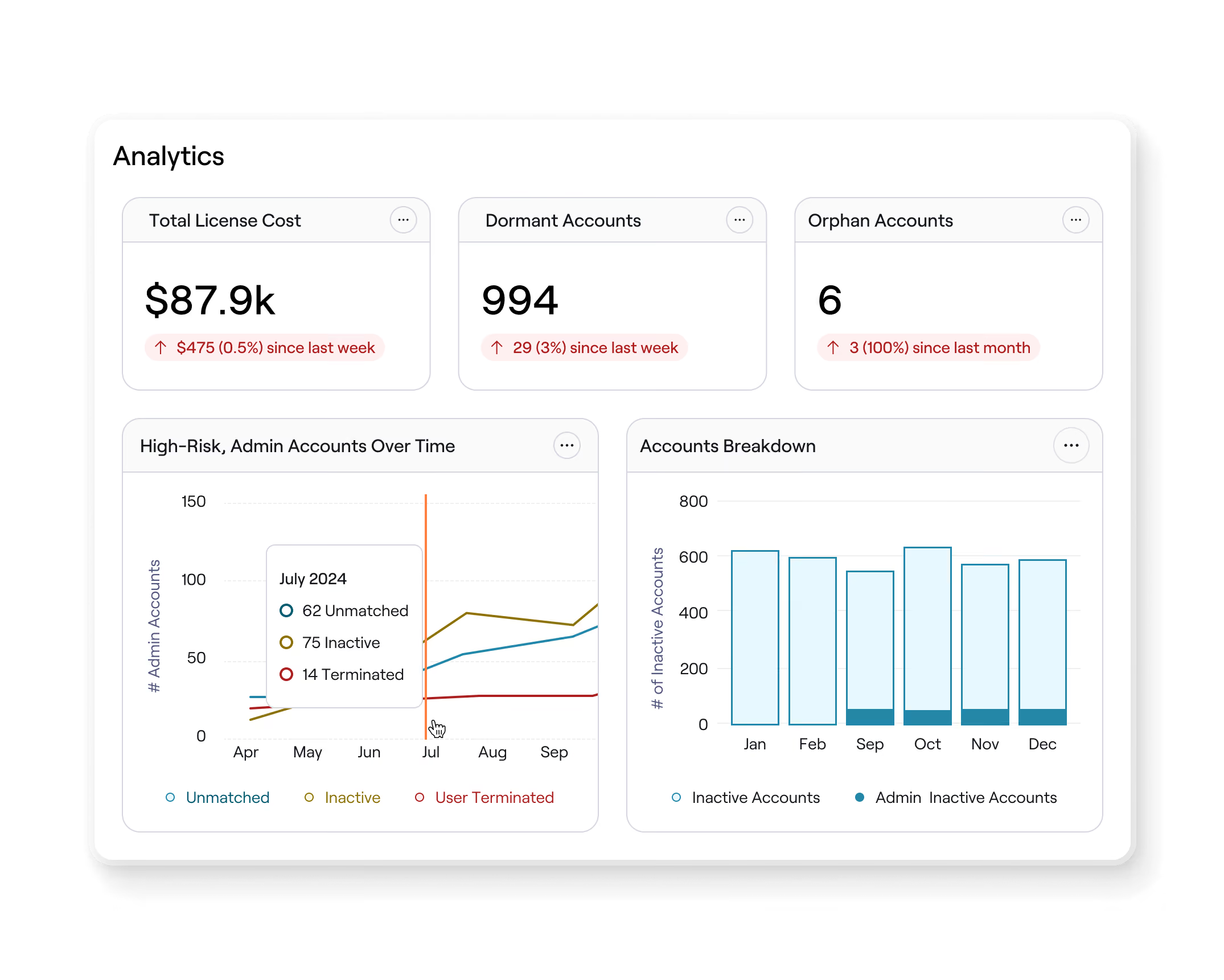
Role-based, real-time dashboards give app owners and department leaders the data they care about, without a request queue to wait on.

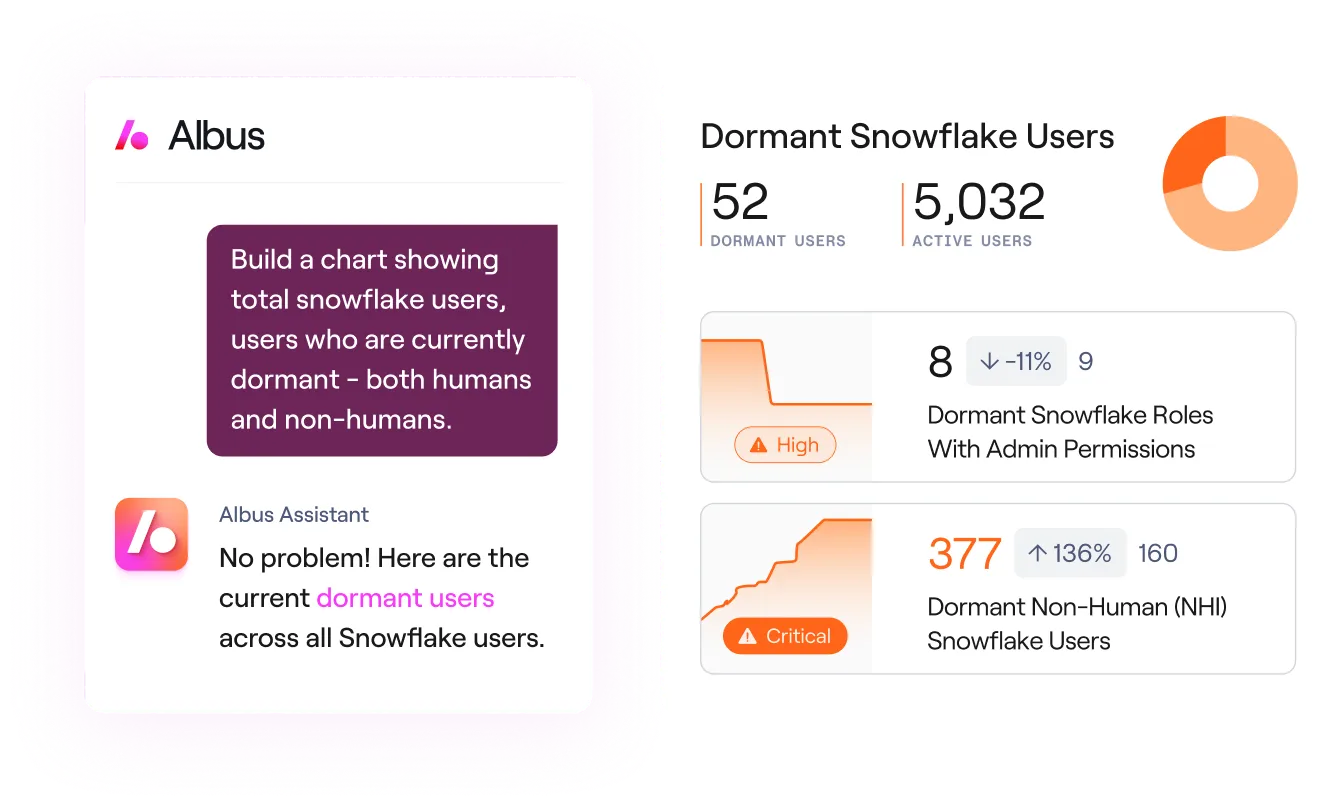
Build a chart by asking for it
Describe the question in plain language, and Albus builds the chart without an analyst or a BI ticket in the loop.

Spot risk before it's a finding
Shadow IT, dormant accounts, and over-privileged access surface on their own, each with a way to fix it already attached.
Bring
Agentic AI
to Identity Visibility & Intelligence
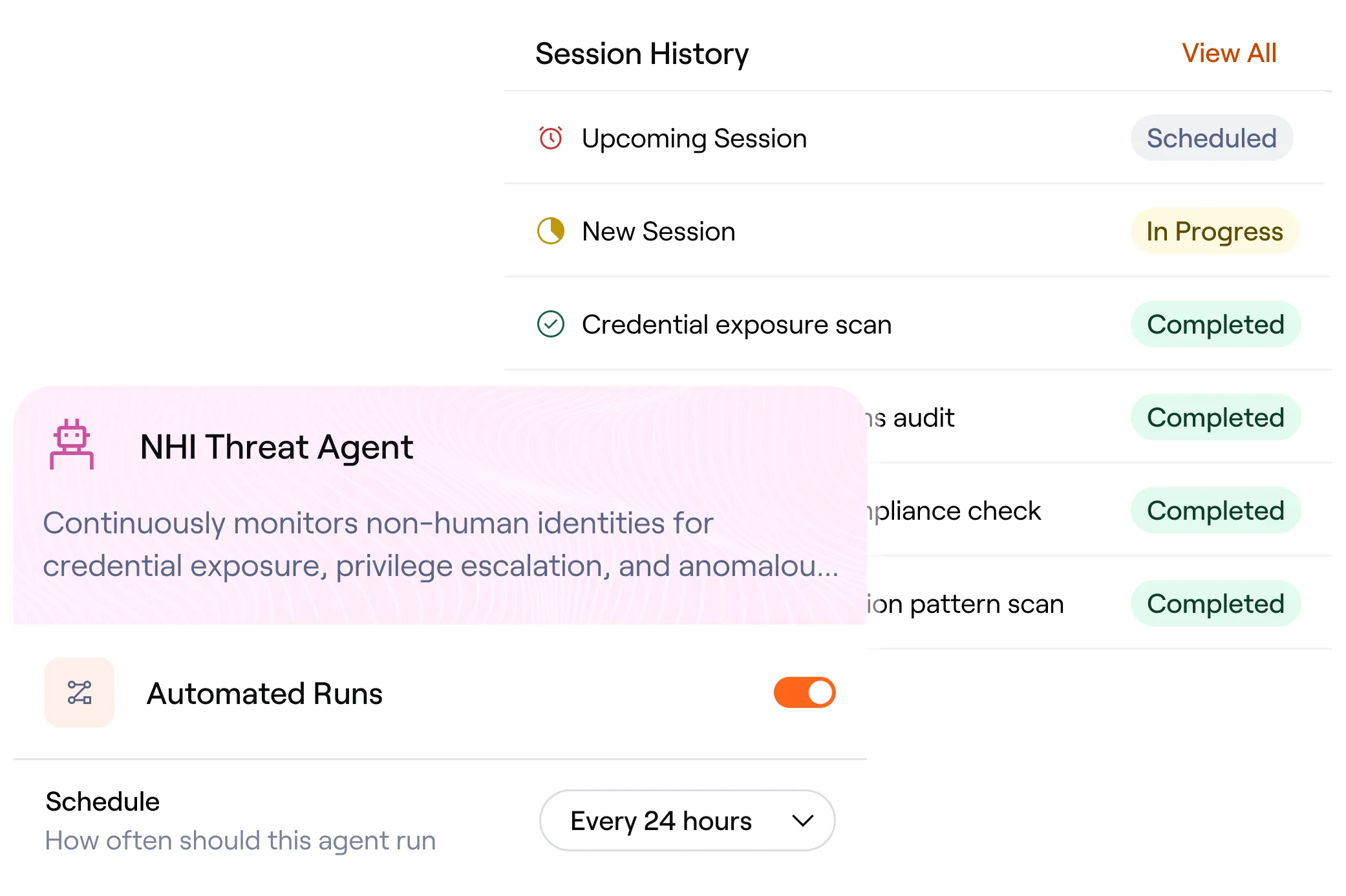
Visibility and intelligence are no longer enough to keep up with the current identity landscape. Only Lumos' Identity Intelligence has the capabilities of Identity Security Agents to find risks, recommend fixes, and remediate issues at the scale of the agentic workforce.

Outcomes You Can Measure



How Identity Analytics Works
Specific workflows
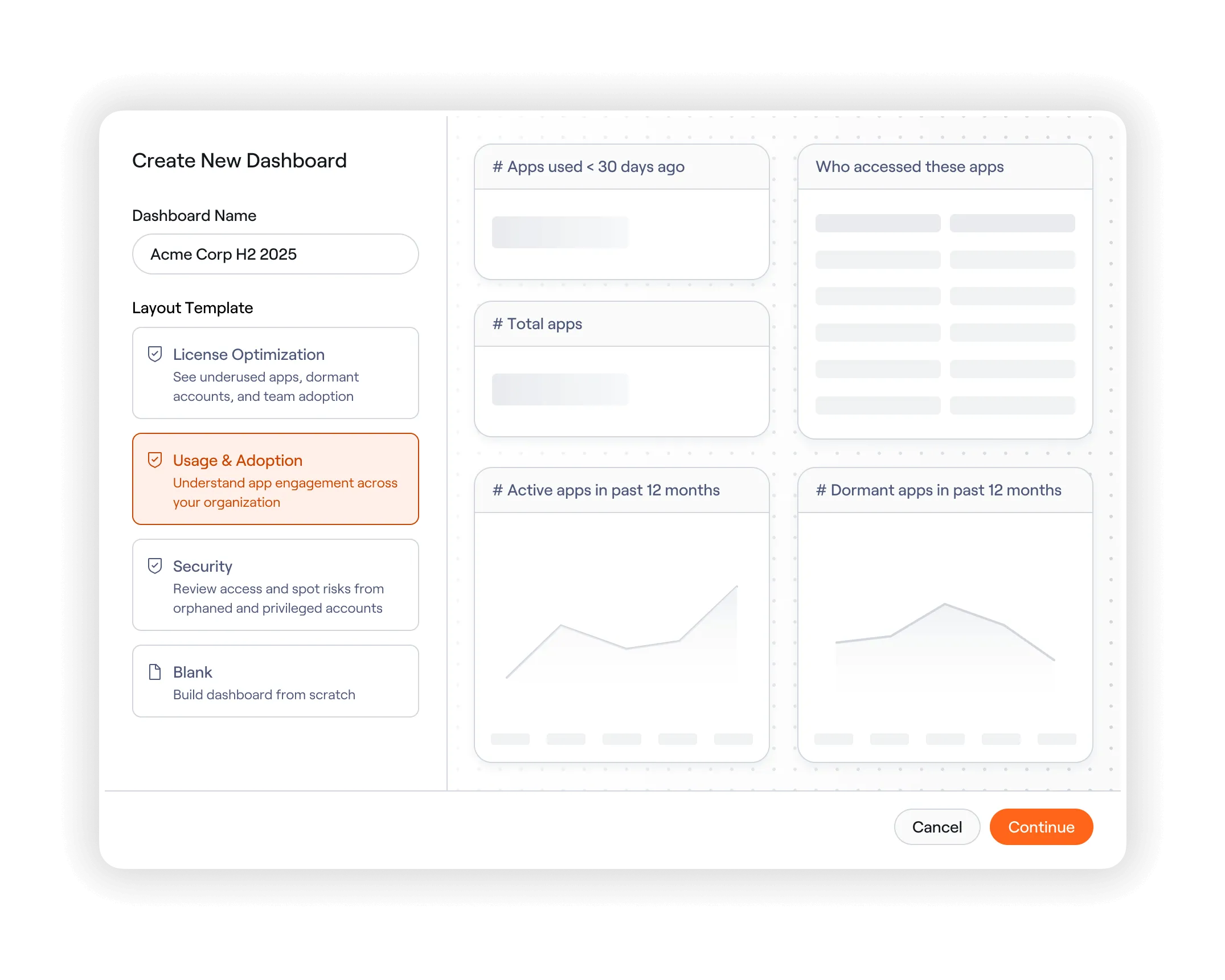
Purpose-built dashboard templates, not a generic BI tool, each designed for individual jobs: privileged posture, shadow IT and AI governance, JML hygiene, or SoD risk.
Powered by context & memory
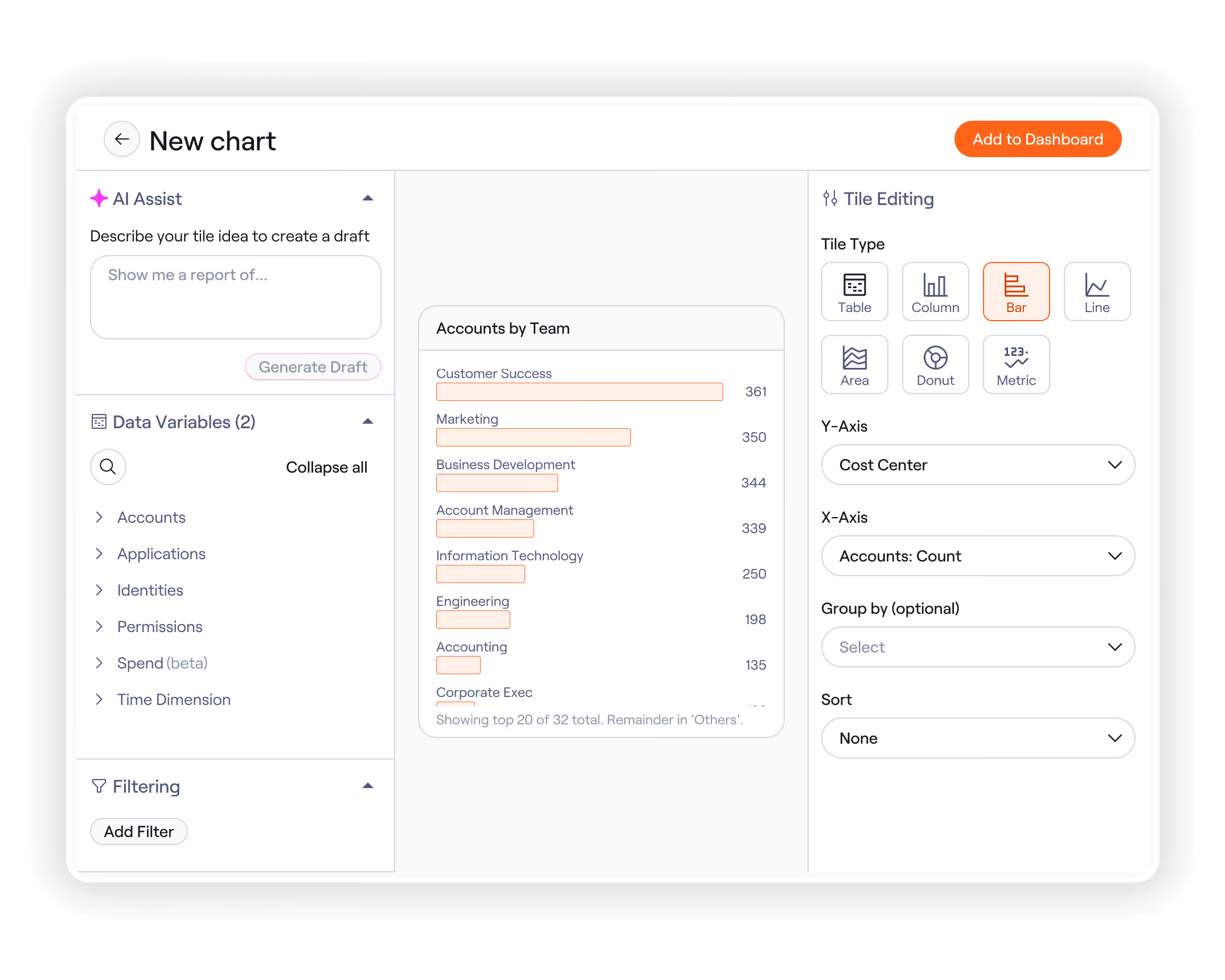
Ask Albus a question in plain language, like "show inactive users by department," and it selects the right fields, filters, and visualization on its own.
On top of deep visibility
Every dashboard runs on the same real-time, entitlement-level access graph across your IdP, HRIS, SaaS, and cloud stack, refreshed continuously instead of pulled from a stale export.











Additional Resources
Frequently Asked Questions

Identity analytics is the practice of analyzing identity and access data to uncover risk, enforce least-privilege access, and inform governance decisions, covering who has access to what, why, and how it's being used, across every user, app, and system. With Lumos, identity analytics runs on Albus, which delivers real-time insight into over-provisioned accounts, access anomalies, and policy gaps.
Identity data is the information tied to a user's digital identity: role, department, group memberships, application entitlements, login history, and access activity. Lumos aggregates this data across your HRIS, IdP, and 300+ apps, giving IT and security teams full visibility into who has access to what and how it's used.
Identity analytics dashboards are visual, often role-based views built to answer a specific identity question, such as which accounts hold privileged access or where access was left behind after a role change, rather than a generic report. Lumos ships prebuilt templates for privileged posture, shadow IT and AI governance, JML hygiene, and SoD risk, and lets teams build their own with drag-and-drop or a plain-language question to Albus.
Common use cases include detecting over-provisioned or orphaned accounts, enforcing least privilege and role clean-up, identifying shadow IT and redundant apps, supporting audit readiness with access trails, and flagging risky access combinations and SoD violations. Lumos operationalizes each of these through automation, so teams act on the finding instead of just seeing it.
IT typically uses identity analytics to track license usage and app adoption; Security uses it to catch privileged access and shadow IT risk in real time; GRC uses it to pull SoD and access-posture evidence for a framework like SOC 2 or SOX. Lumos serves all three from the same underlying access graph, with role-based dashboards scoped to what each team needs to see.



Don't let any identity become your next breach.
Govern every human, machine, and AI in your business with a free identity assessment today.
Book a Demo
The autonomous identity platform. Agents that continuously govern access for every human, machine, and AI.