
Lumos Is the First Partner Integrated with Jira Service Management's Agent Assignment Capability
Oct 9, 2026
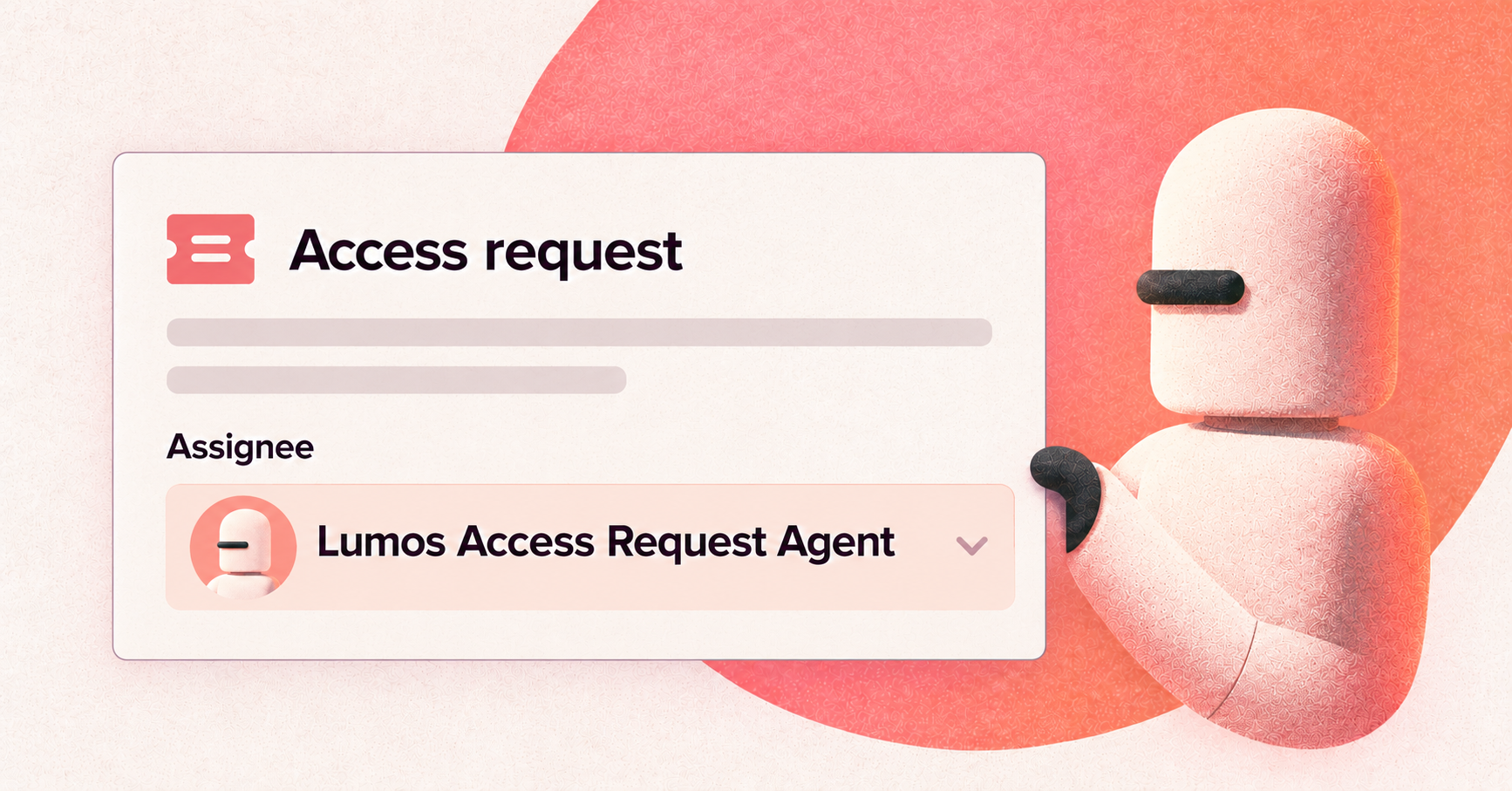
Service desk agents can now assign Jira Service Management access request tickets to the Lumos Access Request Agent, which creates the request in Lumos and reports status back.
Last Updated
Oct 9, 2026

If you run a service desk on Jira Service Management (JSM), an access request rarely stays where it starts. An employee gets redirected to a different tool to ask for what they need, or the ticket lands in Jira Service Management and a service desk agent has to re-enter it in the system that actually grants the access. And now, service desk teams are also stretched from a different direction. As organizations put more AI agents to work alongside their employees, access requests are piling up faster than service desk headcount is growing.
Atlassian is closing these gaps with a new Jira Service Management capability that lets a ticket be assigned to a third-party AI agent instead of only a person on the service desk, and Lumos is the first partner to integrate with it. A service desk agent can now assign an access request ticket to the Lumos Access Request Agent the same way they'd assign it to a teammate, and the matching request gets created in Lumos directly from the ticket. Teams that forward tickets today keep that exact process, and nobody has to re-enter anything by hand.
This integration is built to drop into the existing process instead of adding to it: a service desk agent assigns the ticket the way they always have, and the Lumos agent takes it from there, even as volume keeps climbing.
How it works
The Lumos Access Request Agent has handled work exactly like this–that is, building well-structured requests in Slack and other channels–for a while now. This integration brings the same agent into Jira Service Management itself.
The agent works with what it's given, using the context it can pull from the ticket in Jira Service Management to match against what it knows about the organization and policies inside Lumos. It uses that to translate the issue into a Lumos access request, and reports status back into Jira Service Management as the request moves. It fetches nothing beyond what's assigned to it.
Let’s say a ticket lands in the Jira Service Management queue at 9:40 on a Tuesday morning, and the title reads "Phone system access." The reporter is a new sales hire, and the description contains the unusable lack of detail that many access requests contain: "I'd like to make phone calls through Dialpad please." No app picked from a dropdown, no access level named, just a sentence.
A service desk agent reads it, recognizes the shape of it, and assigns the ticket to the Lumos agent instead of picking it up herself.
The agent reads the ticket in Jira Service Management, matches the existing details to the user, access levels, and policies in Lumos, and marks the ticket as in progress. The request moves through the same approval path it would if the employee had asked for Dialpad access directly in Lumos, including resolution if the request is approved by policy. Once the request resolves, the agent reports the outcome back into the Jira Service Management ticket, and the ticket closes.
The service desk agent never had to explain Dialpad to a bot, and she never had to leave Jira Service Management to handle the ticket.
Why Lumos
About 60% of Lumos customers run an ITSM tool to manage access requests, and Jira Service Management makes up nearly half of that group. The Lumos Access Request Agent has been reachable where employees are already working (e.g., Slack) for some time, and last month Lumos shipped support for configuring multiple ITSM tools within the same organization. This integration builds on that work: that same agent, now reachable from inside the ticketing system most of our customers already use.
The 46% of tickets that show up without sufficient detail cause the most pain, and an agent that can pick up that ticket directly and create a matching request removes the round trip without changing who approves what. The request still goes through the same approval flow it always has. The agent just handles getting it there.
What's next
Assignment is manual today. A service desk agent decides which tickets go to the Lumos agent, the same way they'd assign one to any teammate. We're building automatic routing, so a ticket can reach the agent before a person has to touch it.
If your team runs ServiceNow or Zendesk instead of Jira Service Management, this integration isn't available to you yet. But the pattern behind it, a ticket assigned to an agent and resolved inside the system your team already works in, wasn't built as a one-off, it's the direction the rest of our ITSM work is headed.
See it in action
The walkthrough above shows the full path from an assigned ticket to an in-progress session to a resolved request, without anyone leaving Jira Service Management. You can learn more about AI capabilities in Jira Service Management here. To see what the Access Request Agent can do beyond Jira Service Management, visit the Lumos Access Request Agent product page.
Keep Reading






Don't let any identity become your next breach.
Govern every human, machine, and AI in your business with a free identity assessment today.
Book a Demo
The autonomous identity platform. Agents that continuously govern access for every human, machine, and AI.